After The Session: Neurodivergence and Critical Disability Theory with Dr David Cane
Monday 9th November 2026
Voice Study Centre
A recap of our session with Dr David Cane, Senior Lecturer on the Voice Study Centre MA in Voice Pedagogy, on disability and neurodivergence within the voice teaching studio.
When we talk about disability and neurodivergence in voice teaching, the first thing that comes to mind is often a single question: what do I do if a disabled or neurodivergent student walks into my studio? In this session, Dr David Cane invited us to think much bigger. The teacher might be disabled or neurodivergent. So might a choir director or a colleague. The songs we teach may depict or use disability as a metaphor. Even the foundational texts of voice pedagogy carry assumptions about bodies and voices.
This was a densely theoretical tour, and David was open about that. His argument was that the most important work is not a checklist of practical tips, but a rethink of what we believe teaching is for. Here are the main threads.
Starting points
David opened with two quotations. Musicologist Joseph Straus describes disability as a pervasive and permanent aspect of the human condition, one that most of us will experience at some point as we age. Critical disability studies scholar Dan Goodley argues that studying disability starts with disability but never ends with it, because it offers a space from which to think through political, theoretical and practical questions that matter to everyone.
How is disability defined?
David traced how disability has been defined in UK law, from the Disabled Persons (Employment) Act of 1944 through the Disability Discrimination Act of 1995 to the Equality Act 2010. The language has shifted from employment and "handicap" to participation in everyday life. The World Health Organization estimates that around 1.3 billion people, roughly 15 to 16 per cent of the world's population, experience disability.
A turning point came in 1976 when the Union of the Physically Impaired Against Segregation (UPIAS) argued that it is society which disables people with impairments. They distinguished impairment (the biological reality) from disability (the disadvantage created by a society that takes little account of impairment). This puts the onus on society to change, rather than on the individual. David noted that the Equality Act, while a major step, doesn't really adopt this social view.
A broad umbrella
Disability isn't one thing. David walked through several areas relevant to the studio, with implications for teaching in each:
- Sensory disability: blindness and visual impairment, Deafness (with a capital D to signal cultural and linguistic identity), hearing loss, deafblindness and sensory processing differences.
- Physical disability: mobility and dexterity, limb differences, chronic illness and pain, neuromuscular conditions.
- Cognitive and intellectual disability: including learning disabilities and differences such as dyslexia, dyscalculia and dyspraxia, where pace, memorisation expectations and the clarity of instructions matter.
- Mental health and psychiatric disability: including anxiety, depression and PTSD, where safe, non-judgmental spaces and signposting to support are important. This connects to the growth of trauma-informed approaches in voice pedagogy.
- Voice and speech disability: including dysphonia, vocal fold paralysis, stammering, aphasia and others. David made a pointed observation here: voice pedagogy often talks about referral and rehabilitation, but some people have non-normative voices and aren't looking for a cure. They deserve access to voice work and the pleasure of developing their voices for its own sake.
He also discussed neurodivergence. The term neurodiversity, from Judy Singer in the late 1990s, treats brain differences as natural variation, like biodiversity. Strictly, a group has neurodiversity, while an individual is neurodivergent or neurotypical (a term attributed to Kassiane Asasumasu). Whether neurodivergence belongs under the disability umbrella is debated, but David challenged the idea that being under that umbrella is inherently negative. Higher education statistics categories, such as learning differences, social communication conditions, long-term health conditions, mental health conditions and sensory and physical impairments, overlap considerably, and the final "anything else" category shows that disability is notoriously hard to pin down.
Models of disability
From the field of disability studies (with early figures including Mike Oliver and Vic Finkelstein), David set out several models, each emphasising different things:
- Individual or medical model: the problem is located in the individual, and the response is rehabilitation or cure.
- Social model: the problem lies in a society that excludes people, and the response is removing barriers. David's first key point for the studio: the onus for change is on us as providers, not on the student.
- Minority model: from the North American context, treating disability as a positive minority identity and building coalitions with other civil rights movements.
- Affirmation model: an addition to the social model, in which disability is something that can be affirmed as a positive part of identity.
- Cultural model: disability is shaped by the stories, images and values of a culture, which change over time.
He also touched on language. Person-first ("a person with a disability") and identity-first ("a disabled person") language each have arguments in their favour, and usage varies by region. David tends to use identity-first language in his own work, but follows individual preferences. The point is to ask what our language reveals about how we think about disability.
Where the social model falls short
The social model can underplay the realities of impairment, such as chronic pain or vocal strain. Removing every barrier wouldn't remove all of those experiences. This is part of why critical disability studies pays renewed attention to impairment, to the cultural stories we tell, and to intersectionality (the connections between disability, gender, race and class).
Stories about disability
David introduced Mitchell and Snyder's idea of narrative prosthesis: disability is often used as a device to drive a story, symbolise something, or distinguish characters, rather than being explored authentically. Examples run from fairy tales and horror films to opera, where databases catalogue hundreds of depictions of disability, and musical theatre. His point wasn't that we should discard every work with a negative portrayal (we'd have very few left), but that we should interrogate the assumptions about disability that sit at the heart of the stories we teach and perform.
He also raised the issue of disability mimicry, where non-disabled performers play disabled roles. Time and effort go into honing the physical characteristics of an impairment, so the same effort could instead go into making productions accessible for disabled performers. On the positive side, he highlighted projects such as the Revoice choir for people with learning disabilities and the Paraorchestra, which involve disabled and non-disabled musicians working together.
The ideology of ability and ableism
Drawing on critical disability studies, David introduced the ideology of ability: the web of ideas and myths that treat ability as the baseline for being human, so that less ability can be seen as less human. Able-bodiedness is hard to define except as "not disabled", which suggests it is a fiction. Citing Lennard Davis, he explained that the idea of a "normal" body is historically specific, linked to the rise of statistics, and that no one matches the ideal.
Ableism is the system of beliefs and practices that privilege non-disabled people and marginalise disabled people, often operating invisibly as "common sense". Critical disability studies asks us to question that common sense, and to think about intersections such as feminist disability theory, crip theory (bringing disability and queer theory together and reclaiming a once-derogatory term), neuroqueer theory (the idea of "neuroqueering" as something people do, defying fixed categories) and DisCrit (disability and critical race theory).
What this means for voice pedagogy
David argued that the field of voice pedagogy isn't exempt. Drawing on a critique of Western classical voice pedagogy, he noted that influential texts, including Richard Miller's, present an idealised, physically optimal body and a Western ideal of beauty as natural, and then treat that as the standard that a singer's voice should meet. Traces of racism and ableism can therefore sit inside foundational texts of our discipline. Again, the aim is not to throw them out but to read them critically.
He also noted that voice study is increasingly linked to rehabilitative fields such as speech and language therapy, physiotherapy and medicine, which is valuable. But if we hand the conversation over to those fields alone, we risk losing the perspective of disability studies, which sees potential value in difference. The same goes for anatomy teaching: traditional anatomy curricula and textbooks usually depict an "ideal" or "normal" body, which can shape the attitudes of future professionals.
Universal design and Universal Design for Learning
Universal design began in architecture, shaped by disabled designers and the disability rights movement, as design that works for everyone without retrofitting. It has since been adapted for education as Universal Design for Learning (UDL), built on three principles:
- Multiple means of engagement: co-creating aims, goals and levels of challenge with students, and considering repertoire choices and the predictability and safety of the environment.
- Multiple means of representation: using resources beyond standard notation, such as call and response, colour coding, shapes, larger print and scaffolded vocabulary.
- Multiple means of action and expression: varied assessment options, performance modes and physical positions.
David acknowledged that this just sounds like good teaching, which is partly the point.
Practical ideas shared
- Visual impairment: accessible formats such as large print, screen-reader friendly files or braille, asking students how best to describe posture, avoiding unnecessary room changes, tactile markers, a consistent studio layout and a haptic metronome. Braille music notation has existed since the 1820s, but it is read linearly, is not a simple like-for-like swap with print, and not every visually impaired person uses it.
- Mobility and physical disability: step-free access, wide doorways, adjustable chairs and music stands, non-slip floors, flexibility about sitting or standing, and online or hybrid lessons. If your own studio isn't accessible, a local network of teachers with accessible studios can help.
- Deaf and hearing-impaired students: facing the student for lip-reading, working with interpreters, providing notes, learning key signs, assistive listening devices and live captions. Never assume voice work isn't for a deaf student.
- Neurodivergent students: predictable structure, sharing a lesson plan in advance, checklists for transitions, awareness of lighting, noise and smells, sensory breaks, and explicit permission for stimming and movement.
- Exams and assessment: avoiding rigid formats, applying for reasonable adjustments with exam boards, and facilitating accessible spaces for recorded exams.
A loving critique of UDL
David ended the practical section with a provocation. A critique of UDL suggests that it relies on "predictable learning variability": imagining the range of students we might meet and planning for them. The more we imagine and prepare for particular kinds of disabled student, the more likely we are to exclude someone who doesn't fit our imagination. The suggested remedy is to focus our imagination on pedagogy itself (what learning and assessment are) rather than on imagined students.
He contrasted traditional access, which focuses on compliance and often aims to make disability disappear, with critical access, which starts from lived experience, treats access needs as contextual and changing, keeps disability at the centre, and asks who shapes what participation looks like.
From bel canto to malcanto
David closed with the concept of malcanto, a term for "damaged" voices as an alternative to bel canto (beautiful singing). The word "damage" carries judgment, yet in pop and contemporary commercial music, a damaged sound can be valued, even idolised. David acknowledged that it is important to show that belting is not harmful and that contemporary commercial pedagogy is legitimate, but warned that the push for legitimacy may carry some ableist assumptions that aren't being examined enough. Malcanto serves as a provocative reminder to resist the norms of our field, and not as a pedagogical approach in its own right.
Two guiding principles
- "Nothing about us without us." Any effort to make studios more inclusive has to involve the voices and perspectives of disabled clients and colleagues, with open channels of communication rather than assumptions.
- "When you have met one disabled person, you have met one disabled person." Avoid one-size-fits-all approaches. Learn from experience, but stay open, because each person is unique.
In the discussion, participants reflected on how co-creating sessions with a client (including one who was Deaf and used hearing devices) reflects this approach. David agreed that you learn something from every encounter without assuming it applies to the next.
Resources mentioned
- Drake Music's resources for inclusive music teachers, leaders and community musicians, its network and Facebook group, and its emerging programme for early-career disabled musicians
- A Universal Design for Teaching forum and related social media resources, created by a previous VSC guest speaker
- RNIB resources on learning to read music in braille
- Disability policies from the main music exam boards
- David's slides and full reference list, which will be sent to participants
Watch it back
The recording and David's slides and references will be sent to everyone who booked. If you have questions or reflections after the session, David welcomed hearing from participants.
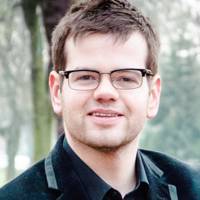
Dr David Cane
Dr. David Cane is a Lecturer with expertise in musicology, qualitative and quantitative research design, disability studies, and postgraduate supervision. He plays a central role in research methods teaching and dissertation supervision. David’s research interests include critical disability and queerness. David is a lecturer, researcher, singer, singing teacher and choir director.
Recent Posts
After The Session
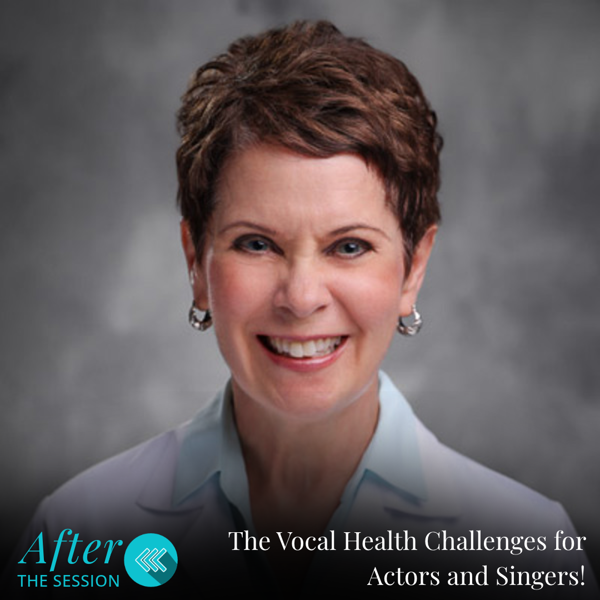
After The Session: The Vocal Health Challenges for Actors and Singers with Leda Scearce
Voice Study Centre
Wednesday 4th November 2026A recap of our two-part course with Leda Scearce, singing voice specialist and speech-language pathologist at Duke Voice Care Center in North Carolina. Over two afternoons, Leda Scearce took our community on a deep dive into the voice as a high-performance instrument. A former professional opera singer who taught at several universities before retraining as a speech-language pathologist, Leda now works with singers and other performers who have voice injuries. Her message across both days was clear: singers and actors are vocal athletes, and voice teachers are on the front lines of their vocal health. Here are the highlights from both sessions. Please note that this is a summary of a teaching session, not medical advice. If you or a student have a voice concern, see a qualified voice specialist.
Read More...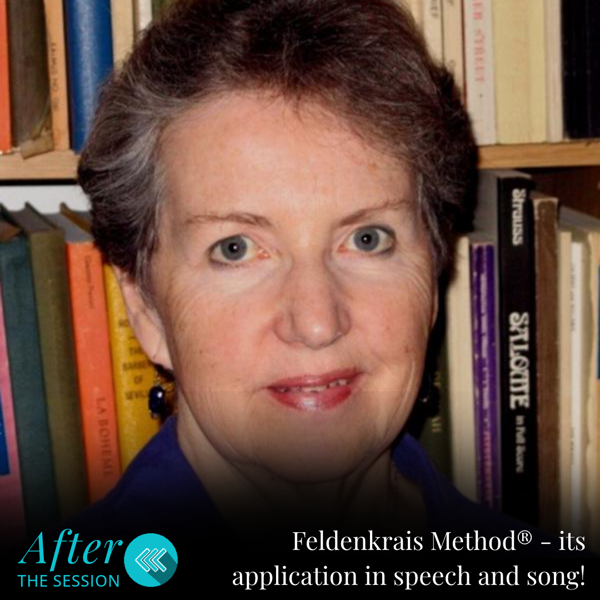
After The Session
After The Session: Feldenkrais Method® - its application in speech and song! with Marina Gilman
Voice Study Centre
Monday 2nd November 2026A recap of our session with Marina Gilman, Guild Certified Feldenkrais Practitioner, singing teacher, performer and licensed speech pathologist specialising in voice. How do we change vocal habits we don't know we have? That was the question at the heart of our latest session with Marina Gilman, and her answer was equal parts science, storytelling and gentle movement. Rather than lecturing from the front, Marina had the whole room (and everyone watching online) moving, sensing and humming along from their chairs. If you joined us, here is a reminder of what we explored. If you missed it, here is a taste of why this method has so many voice teachers talking.
Read More...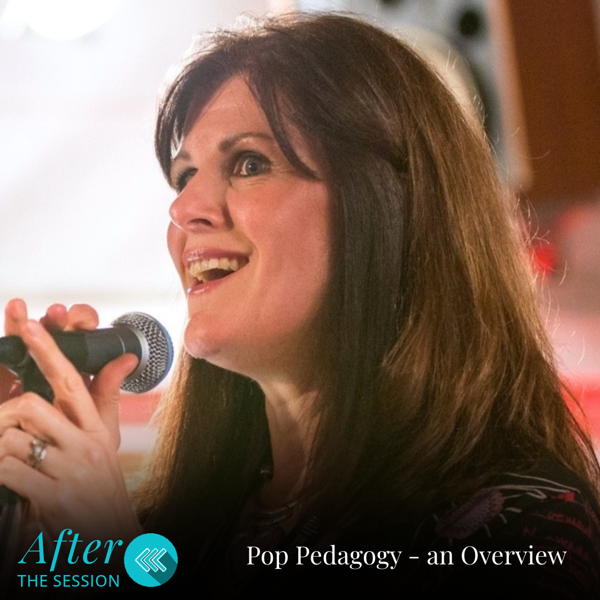
After The Session
After The Session: Pop Pedagogy - an Overview with Kim Chandler
Voice Study Centre
Wednesday 28th October 2026A recap of our recent session with Kim Chandler, broadcast live from a recording studio in Marbella, southern Spain. When a session singer, industry vocal coach and academic walks into one room, you get a very particular kind of masterclass. Kim brought all three hats to our latest short course, a two-hour "whistle-stop tour" of the 15 areas she believes a pop-specific vocal pedagogy should cover. Fittingly, she taught it from the very room where the vocals for Kung Fu Fighting in Kung Fu Panda 3 were recorded.
Read More...