Applying Exercise Science Principles to Voice Pedagogy: Skill Acquisition, Performance Assessment, and Literature Selection
Thursday 27th July 2023, 5:00 PM - 7:00 PM (London Time)
Although there is a large body of literature that applies exercise principles to athletic goals (running marathons, strength training, etc.), there is comparatively little research that applies these same principles to singing endeavours.
This article applies exercise science principles to specific vocal warm-up regimes (skill-acquisition exercises) and literature selection for classical singers.
After an introductory discussion of skill acquisition from an exercise physiology perspective, discussion will segue to a review of skill-acquisition warm-ups that are commonly used in classical voice training and habilitation.
An examination of historical and contemporary methodologies reveals that traditional warm-ups for singers can be categorised according to targeted areas of skill acquisition, such as those that address onset/release, breath management, agility/flexibility, registration blending, tone/resonance development, or range expansion.
Based on this information, the presenter’s research suggests the development of a rubric to assess the skill levels of individual singers in each of these areas.
Teachers of singing can then consider these data when assigning repertoire from the standard body of vocal literature so that the specific areas of skill acquisition focused on in the warm-up are applied and reinforced through appropriate repertoire selection.
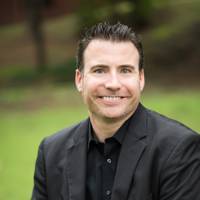
Matthew Hoch
Matthew Hoch joined the faculty of Auburn University in 2012, where he was tenured in 2015 and promoted to the rank of professor in 2020. His research program...
Attend this course for as little as £22 as part of the Voice Professional Training CPD Award Scheme.
Learn MoreSorry, this is an archived short course...
We have plenty of upcoming short courses coming soon. See details of some of them below or look at the full list of short courses.

Wednesday 4th March 2026
1:00 PM - 2:00 PM
Wednesday 11th March 2026
1:00 PM - 2:00 PM
Wednesday 18th March 2026
1:00 PM - 2:00 PM
Wednesday 25th March 2026
1:00 PM - 2:00 PM
Wednesday 1st April 2026
1:00 PM - 2:00 PM
Wednesday 8th April 2026
1:00 PM - 2:00 PM
(London Time)
Learn to Coach RP and SSBE – a Certificate in Accent Coaching

Louisa Morgan
This six-week course is an opportunity to learn about both Received Pronunciation and Standard Southern British English. Rather than a course in learning how to speak RP/SSBE (there are many brilliant available courses for this already), this course is about learning how to coach it.


Wednesday 25th March 2026
5:00 PM - 7:00 PM
(London Time)
Mastering the Art of "Marking": Vocal Longevity for the Modern Singer

Jacob Wright
Don’t just save your voice—optimize it! Join Jacob Wright as he explores marking technique in singing, a vocal conservation strategy used by singers during rehearsals and extended performance periods. Marking involves singing at reduced vocal intensity, altered pitch, or modified vocal quality to preserve vocal health while maintaining musical and dramatic engagement. Participants will gain practical tools for implementing marking in their own practice, teaching, or clinical work, supported by current research and voice science principles!

Friday 27th March 2026
1:00 PM - 3:00 PM
(London Time)
Muscle Tension Dysphonia in the Singing Voice!

Dr Claire Thomas
A specialist course for singing teachers and voice professionals! Designed specifically for those working with singers, this in-depth course with Dr Claire Thomas explores Muscle Tension Dysphonia (MTD) through the lens of the singing voice - bridging clinical research and studio practice.