Discovering ‘Vocal Transparency’: Integrating Miller Voice Method and the Michael Chekhov Technique
Tuesday 19th August 2025, 5:00 PM - 7:00 PM (London Time)
In this workshop, Kristi Dana will offer highlights of her performance and teaching-based research in the search for ‘Vocal Transparency’—a spontaneous, unfiltered, easily understood expression that clearly communicates the point-of-view of the character. She will share key points around the neuroscience of circular breathing techniques, focusing specifically on Miller Voice Method’s “Active Breath” and its integration with the psychophysical approach of the Michael Chekhov Technique.
Participants will first be guided through embodiment of the flow and presence created by Miller Voice Method's “Active Breath”. Focus will be placed on how the Active Breath assists in diminishing the “sculpting” of text that can get in the way of a spontaneous expression.
Next, Kristi will guide participants through the integration of the Active Breath work with select elements of the Michael Chekhov Technique, thereby igniting the imagination, spoken impulse, connection to the body, and revealing the inner psychology of the character. Participants will work with text to experience practical application of the merger of the two approaches.
*Participants may work with their own, memorized text, (just a few lines will do!) but if they do not have any, text will also be provided.
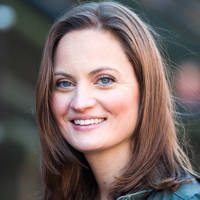
Kristi Dana
Kristi Dana is an Associate Professor of Voice & Speech at Southern Methodist University. She has been studying with and working alongside Scott Miller for the past twelve years, first assisting him at NYU Grad Acting and at the Michael Chekhov Studio in NYC, joining mVm’s first-ever official cohort of certified teachers, and eventually becoming the Director of mVm Miller Voice Method’s Teacher Certification Program and joining its faculty.
Attend this course for as little as £22 as part of the Voice Professional Training CPD Award Scheme.
Learn MoreSorry, this is an archived short course...
We have plenty of upcoming short courses coming soon. See details of some of them below or look at the full list of short courses.

Wednesday 4th March 2026
1:00 PM - 2:00 PM
Wednesday 11th March 2026
1:00 PM - 2:00 PM
Wednesday 18th March 2026
1:00 PM - 2:00 PM
Wednesday 25th March 2026
1:00 PM - 2:00 PM
Wednesday 1st April 2026
1:00 PM - 2:00 PM
Wednesday 8th April 2026
1:00 PM - 2:00 PM
(London Time)
Learn to Coach RP and SSBE – a Certificate in Accent Coaching

Louisa Morgan
This six-week course is an opportunity to learn about both Received Pronunciation and Standard Southern British English. Rather than a course in learning how to speak RP/SSBE (there are many brilliant available courses for this already), this course is about learning how to coach it.


Wednesday 25th March 2026
5:00 PM - 7:00 PM
(London Time)
Mastering the Art of "Marking": Vocal Longevity for the Modern Singer

Jacob Wright
Don’t just save your voice—optimize it! Join Jacob Wright as he explores marking technique in singing, a vocal conservation strategy used by singers during rehearsals and extended performance periods. Marking involves singing at reduced vocal intensity, altered pitch, or modified vocal quality to preserve vocal health while maintaining musical and dramatic engagement. Participants will gain practical tools for implementing marking in their own practice, teaching, or clinical work, supported by current research and voice science principles!
Friday 27th March 2026
1:00 PM - 3:00 PM
(London Time)
Muscle Tension Dysphonia in the Singing Voice!

Dr Claire Thomas
A specialist course for singing teachers and voice professionals! Designed specifically for those working with singers, this in-depth course with Dr Claire Thomas explores Muscle Tension Dysphonia (MTD) through the lens of the singing voice - bridging clinical research and studio practice.