That’s What He Said: Gender Inequity in Sound Perception Research
Tuesday 30th July 2024, 5:00 PM - 7:00 PM (London Time)
Did you know that women were not required to be included in clinical research in the western world until the 1990s? With many of the fundamental models of sound perception we still use today dating back to research conducted throughout the mid-1900s, it’s no surprise that gender inequities abound. This course will detail the historical roots of gender inequity and bias in sound perception research, contrast that against present day research methods, and explore cutting-edge research that highlights the many roles that gender may play in sound perception, as well as in singing, and why those roles may impact research outcomes.
Attendees will be encouraged to share their thoughts on: various sound examples, how they believe gender manifests in sound perception, and their experiences and observations of gender bias and inequities in the field. With a deeper understanding of what we know and what we don’t know regarding the role of gender in sound perception, attendees will be empowered to leave this course with a newfound curiosity and scrutiny of past and present sound perception models and a drive to push the field forward to be more inclusive and equitable.
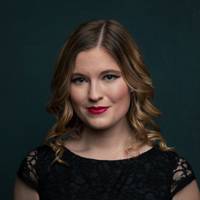
Kristen Murdaugh
Kristen Murdaugh (she/they) is a voice pedagogue, voice scientist, singer, and activist. An evidence-based, identity-affirming, student-centered voice teacher, she believes in helping her students find their most authentic voices through the intersection of cutting-edge voice science and tried-and-true voice pedagogy.

Attend this course for as little as £22 as part of the Voice Professional Training CPD Award Scheme.
Learn MoreSorry, this is an archived short course...
We have plenty of upcoming short courses coming soon. See details of some of them below or look at the full list of short courses.

Wednesday 4th March 2026
1:00 PM - 2:00 PM
Wednesday 11th March 2026
1:00 PM - 2:00 PM
Wednesday 18th March 2026
1:00 PM - 2:00 PM
Wednesday 25th March 2026
1:00 PM - 2:00 PM
Wednesday 1st April 2026
1:00 PM - 2:00 PM
Wednesday 8th April 2026
1:00 PM - 2:00 PM
(London Time)
Learn to Coach RP and SSBE – a Certificate in Accent Coaching

Louisa Morgan
This six-week course is an opportunity to learn about both Received Pronunciation and Standard Southern British English. Rather than a course in learning how to speak RP/SSBE (there are many brilliant available courses for this already), this course is about learning how to coach it.


Wednesday 25th March 2026
5:00 PM - 7:00 PM
(London Time)
Mastering the Art of "Marking": Vocal Longevity for the Modern Singer

Jacob Wright
Don’t just save your voice—optimize it! Join Jacob Wright as he explores marking technique in singing, a vocal conservation strategy used by singers during rehearsals and extended performance periods. Marking involves singing at reduced vocal intensity, altered pitch, or modified vocal quality to preserve vocal health while maintaining musical and dramatic engagement. Participants will gain practical tools for implementing marking in their own practice, teaching, or clinical work, supported by current research and voice science principles!

Friday 27th March 2026
1:00 PM - 3:00 PM
(London Time)
Muscle Tension Dysphonia in the Singing Voice!

Dr Claire Thomas
A specialist course for singing teachers and voice professionals! Designed specifically for those working with singers, this in-depth course with Dr Claire Thomas explores Muscle Tension Dysphonia (MTD) through the lens of the singing voice - bridging clinical research and studio practice.