After The Session: Inspired Not Bound: The Promise of Science-Informed Voice Pedagogy
Wednesday 7th October 2026
Voice Study Centre
Below are key insights and takeaways from Professor Helding’s presentation and the discussion that followed.
-
A Brief History: From Laryngoscopy to Cognitive Science
The inception of voice science as a formal discipline is usually traced back to 1855, when Manuel Garcia presented his observations using the laryngoscope to the Royal Society of London.
Over time, the scientific study of the voice expanded across three key historical milestones:
- Physiology & Medicine (1850s onwards): Early pioneers - often physicians working alongside voice teachers - focused on vocal anatomy, laryngeal function, and vocal health.
- Acoustics & Sound Physics (Mid-20th Century): Post-WWII breakthroughs in linguistics and acoustics led to major pedagogical insights, such as Gunnar Fant’s acoustic theory of speech production and Johan Sundberg’s work on the Singer’s Formant.
- Cognitive Science (Modern Era): Proposed by Helding in 2009 as the essential Third Pillar, cognitive science (including motor learning) focuses on how the human brain and body process, acquire, and retain complex motor skills.
-
Why Don't Facts Alone Change Minds?
A central theme of the session was explaining why simply presenting scientific facts rarely changes deeply ingrained beliefs or behaviors in the studio. Drawing on insights from cognitive and conservation sciences (notably research by Anne Toomey and Daniel Kahneman), Helding outlined four cognitive hurdles:
- Emotion: Neurological research (such as Antonio Damasio’s Somatic Marker Hypothesis) demonstrates that human reason is built upon emotional foundations. Emotions are not a flaw in decision-making; they are a fundamental feature of human cognition.
- Bias & Constructed Memory: Learners continuously mix new information into what they already know or believe. As a result, long-held beliefs harden into intuition, making them resistant to change.
- Complexity & Cognitive Load: The human brain has finite processing limits when handling complex, abstract data (such as acoustics equations). High cognitive load can lead to overload or resistance.
- Heuristics (Mental Shortcuts): To navigate complexity quickly, humans rely on rules of thumb or metaphors.
Key Takeaway: Science-informed pedagogy succeeds not by hectoring or shaming teachers and students with cold data, but by leveraging emotions, wonder, analogy, and metaphors to make complex scientific principles accessible and practical.
-
Demystifying Studio Terminology
Helding highlighted how scientific clarity directly benefits studio teaching by resolving common ambiguities in vocal terminology:
1) Breath Support vs. Breath Control:
- Support relates to the respiratory mechanics (intercostals and abdominal wall) that supply subglottic air pressure.
- Control relates to the laryngeal mechanics (vocal fold adduction and glottal resistance) that regulate how much air passes through the glottis.
2) Vocal Registers: Science moves away from rigid dogmatism, recognizing that registers involve both physiological mechanisms (vocal fold vibration modes) and acoustic interactions within the vocal tract.
3) Belting and Contemporary Commercial Music (CCM): Research shows that belting is a distinct, healthy vocal coordination when executed properly, debunking the historical myth that non-classical production is inherently damaging.
-
"Informed, Not Bound"
What does it mean to be a science-informed voice pedagogue?
Helding emphasized that voice teachers do not need to turn their studios into physics laboratories😊. Science-informed voice pedagogy is a hybrid approach:
- It accesses and interprets peer-reviewed scientific research.
- It translates complex concepts into practical tools (using metaphors, stories, and sensory feedback).
- It honors the artistic experience and empirical wisdom passed down through historical vocal traditions.
Ultimately, voice teaching belongs to the humanities. Science informs our understanding of the instrument, but art, emotion, connection, and human experience remain the true heart of singing.
Further Reading & Referenced Resources
During the course, several key publications were highlighted for further exploration:
- Helding, Lynn. The Musician's Mind: Teaching, Learning, and Performance in the Age of Brain Science.
- Stark, James. A History of Vocal Pedagogy: Intuition and Science.
- Hixon, Thomas J. Respiratory Function in Singing.
- Bozeman, Kenneth. Practical Vocal Acoustics.
- Kahneman, Daniel. Thinking, Fast and Slow.
- Johnson, Ellen. Healing Harmony and The Voice: How Singing Transforms Lives (Forthcoming).
- American Academy of Teachers of Singing (AATS): Position papers on Science-Informed Voice Pedagogy.
For more information about upcoming webinars and courses, please visit the Voice Study Centre event page.
Recent Posts
Student & Alumni News
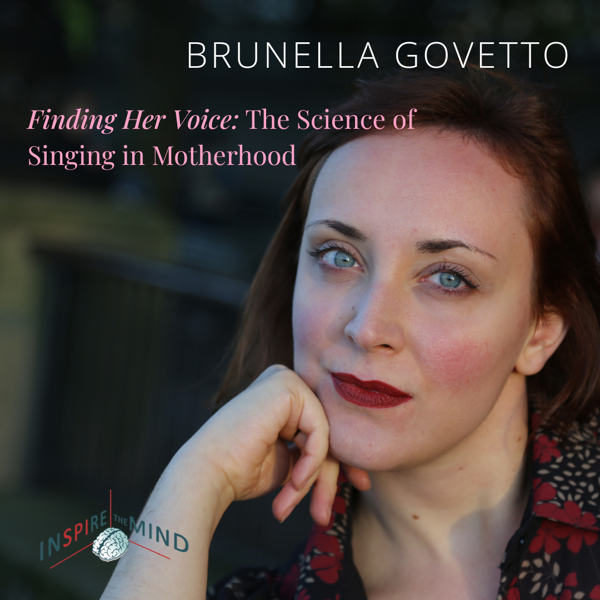
Alumna Brunella Govetto Writes for Inspire the Mind on Singing and Motherhood
Voice Study Centre
Monday 28th September 2026Voice Study Centre alumna Brunella Govetto has written a new article for the Inspire the Mind blog, drawing on her thesis work and experience of working with singing and mothers.
Read More...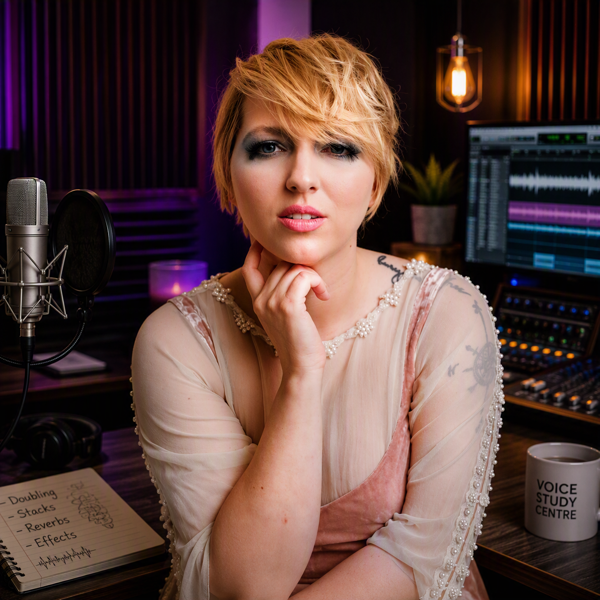
After The Session
After The Session: Doubles and Stacks, Reverbs and Effects: Teaching Vocal Production Skills
Voice Study Centre
Wednesday 23rd September 2026For many vocalists and voice teachers, the world of digital audio workstations (DAWs), hardware, and studio processing can feel like forbidden territory. Yesterday, Voice Study Centre hosted a hands-on, practical short course led by Kelly Hoppenjans (voice teacher, and PhD candidate in musicology at the University of Michigan), designed specifically to break down these technological barriers and empower singers to approach vocal production creatively, playfully, and confidently - so what did we learn?
Read More...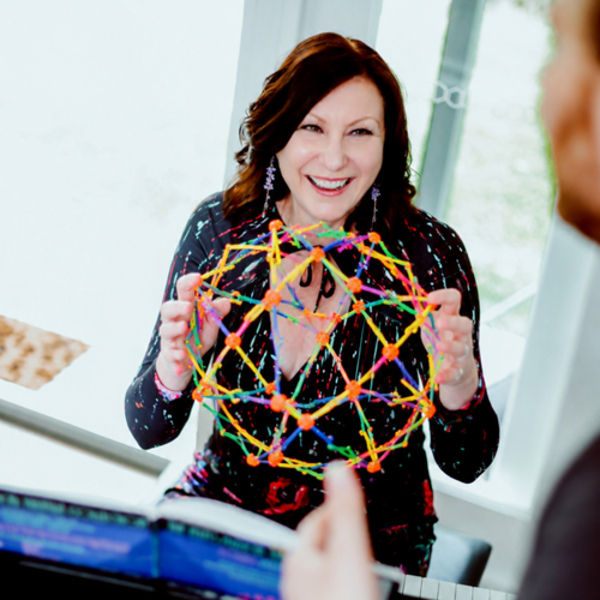
After The Session
After The Session: Games & Gadgets: Unlocking Vocal Skills Through Movement and Play🎤✨
Voice Study Centre
Tuesday 15th September 2026Vocal technique isn't just about standing still in front of a piano and doing scales - it's an interactive, whole-body experience! In a fantastic workshop hosted by the Voice Study Centre today, Naomi Lewandoski (Northside Voice Studio, Australia) led us through an engaging session on how physical movement, somatic awareness, and everyday "gadgets" can transform vocal training.
Read More...