Too Much, Too Little, Just Right! The Balancing Act Model
Wednesday 29th July 2026
Voice Study Centre
What is the Balancing Act Model?
First introduced by Robert Edwin in the NATS Journal of Singing back in 1999 and updated in 2022, the Balancing Act Model operates on a simple premise: you cannot define the middle without knowing where the edges are. Rather than locking students into a rigid, narrow definition of "proper" technique, the model encourages cross-training across the full continuum of vocal possibilities.
"One size does not fit all. Therefore, the balanced, 'just right' aspect of the model may lean towards hyper, or hypo, depending upon the style of singing."
— Robert Edwin (quoting Jeanette LoVetri)
Exploring the Vocal Continuum
During the session, participants became "extremists for a day," experimenting with how hyper and hypo states apply across key components of the singing system:
-
Alignment & Posture
- Hyper: High chest elevation, shoulders pulled back, pulled-in chin (military stance). Helpful for stiff or authoritarian theatrical characters.
- Hypo: Dropped sternum, slouched shoulders, forward head position. Useful for portraying low confidence or defeated characters.
- Balanced: Lifting arms overhead and bringing them comfortably down to find a natural, relaxed torso expansion.
-
Breathing
- Hyper: High clavicular, tension-filled chest breathing (a technique famously used by Barbra Streisand or used on stage to convey panic/anxiety).
- Hypo: Low-energy, sighing breaths (think jazz icon Chet Baker).
- Balanced: Dynamic appoggio—a comfortable interplay between inhalation and exhalation muscles that releases the abdomen to allow lower diaphragmatic descent.
-
Phonation & Onset
- Hyper: High constriction, tight vocal fold closure (the "Kermit the Frog" or overly pressed voice).
- Hypo: Breathy, unpressed phonation with air escaping (the Marilyn Monroe style).
- Balanced: Tailored closure suited to the style—whether that's full, ringing operatic fold closure or conversational pop/rock tones.
-
Resonation & Tone Color
- Hyper-Oscuro (Dark): Heavy, swallowed, "woofy" resonance with low laryngeal placement.
- Hyper-Chiaro (Bright): Extremely nasal, lowered soft palate twang (essential for country singing, character roles like Adelaide in Guys and Dolls, or comedic musical theater).
- Balanced: A rich chiaroscuro balance adapted to genre demands.
-
Articulation & Diction
- Hyper: Over-articulated, crisp consonants where every syllable is exaggerated.
- Hypo: Slurred, vowel-heavy singing with minimal consonant boundary (common in pop or classical styles where diction takes a back seat to line).
- Balanced: Clear, story-driven communication suited to the venue and musical style.
-
Emotional Expressiveness
- Hyper: Overacting, melodrama, or inauthentic emotion.
- Hypo: Flat, emotionless, robot-like delivery.
- Balanced: Authentic storytelling where technical choices serve emotional truth.
Key Takeaways for Teachers & Singers
- Cross-Training Builds Flexibility: Working on extremes prevents singers from locking into one rigid sound and equips them for diverse demands in contemporary commercial music (CCM), theater, and classical genres.
- Avoid the "Dr. Frankenstein" Trap: Teaching isn't about cloning yourself; it's about helping individual students explore their whole instrument and make appropriate artistic choices.
- Directability in Auditions: Auditions in theatre and opera increasingly demand emotional and vocal flexibility. Being able to intentionally swing
Recent Posts
Blog
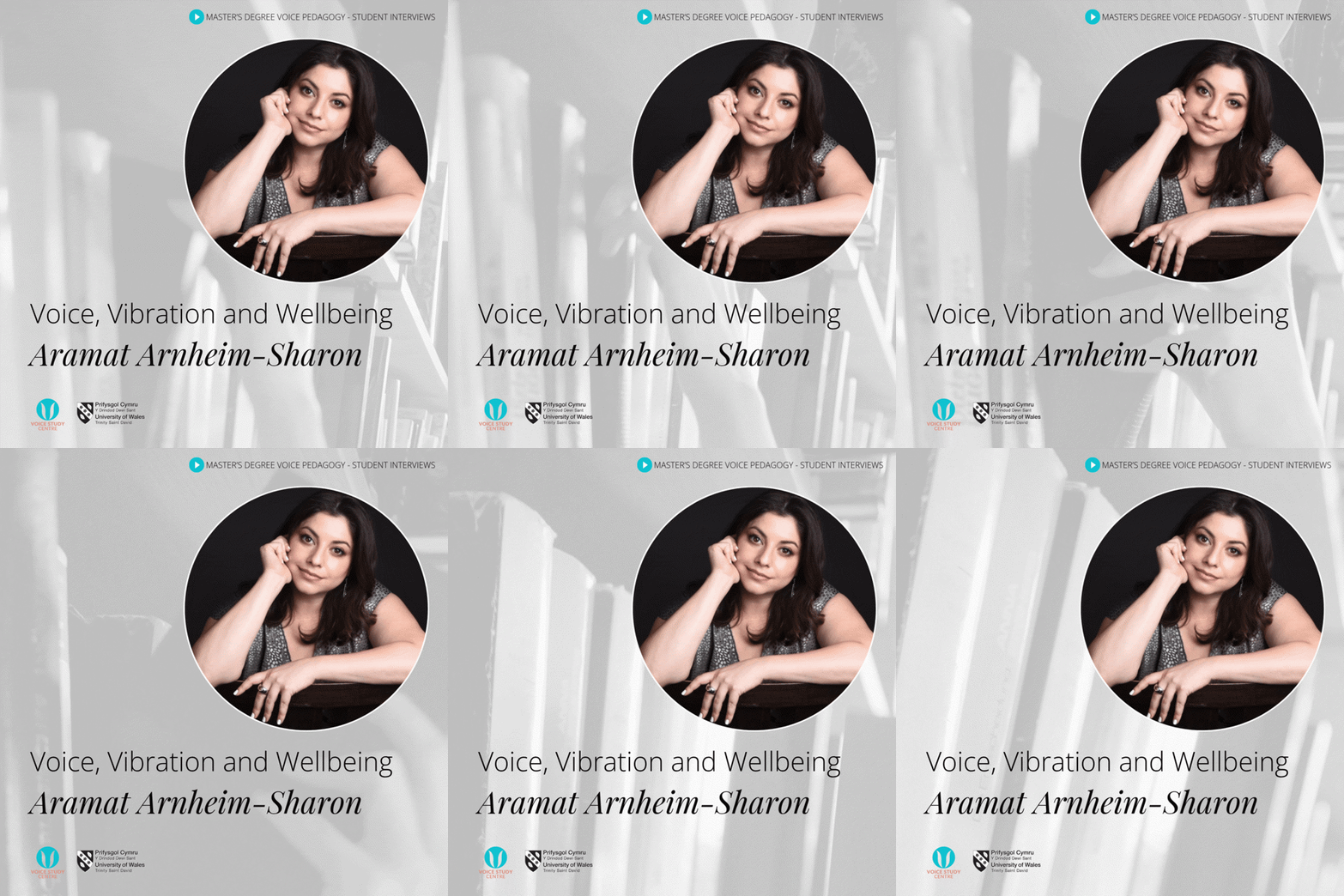
How MA Voice Pedagogy Student Aramat Arnheim-Sharon Contributed to Published Voice Research
Voice Study Centre
Wednesday 29th July 2026Watch our interview with MA Voice Pedagogy student Aramat Arnheim-Sharon as she discusses her contribution to a published research chapter exploring voice, vibration, wellbeing and emerging health research. Discover how postgraduate study supported her journey into academic research, and hear about her current MA research and the development of new tools for voice pedagogy.
Read More...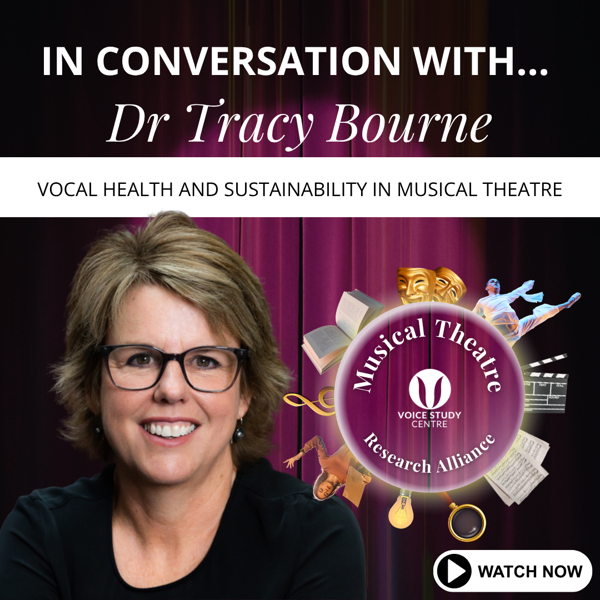
On-Demand
In Conversation with Dr. Tracy Bourne: Vocal Health and Sustainability in Musical Theatre
Voice Study Centre
Friday 24th July 2026Watch the third conversation in the Musical Theatre Research Alliance (MTRA) and Voice Study Centre's In Conversation With series, part of Strand 1: Vocal Health and Sustainability in Musical Theatre. Drawing on her PhD research in voice science and pedagogy, Dr. Tracy Bourne explores vocal health and sustainability in musical theatre through her extensive experience working with emerging and professional performers.
Read More...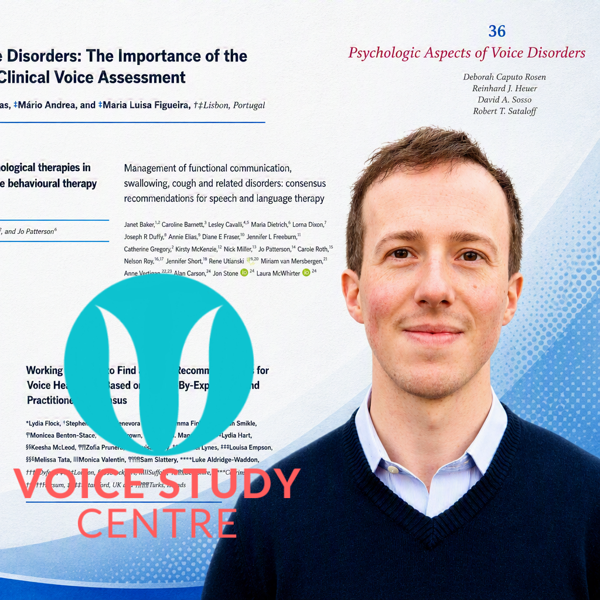
Blog
Working with low self-esteem?
Voice Study Centre
Wednesday 22nd July 2026Yesterday, the Voice Study Centre was delighted to welcome back Dr. Luke Aldridge-Wadden for a fascinating presentation focusing on the intersection of clinical psychology and vocal performance. An NHS Clinical Psychologist, Dr. Aldridge-Wadden delivered an insightful, evidence-informed short course examining how low self-esteem impacts voice users and how educators, coaches, and clinicians can effectively support them in practice. Read more to find out what we learnt!
Read More...