Understanding and Working With Low Self-Esteem in Voice Users, 21st July 2026
With Dr. Luke Aldridge-Wadden Clinical Psychologist (NHS & Independent Practice, BAPAM)
Key Takeaways & Core Concepts
- Defining Self-Esteem
Referencing the work of clinical psychologist Dr. Melanie Fennell, Dr. Aldridge-Wadden emphasized that self-esteem is fundamentally about the overall opinion we hold of ourselves, how we evaluate ourselves, and the value we attach to ourselves as whole human beings.
Unlike self-efficacy (the belief in one’s ability to perform a specific task), self-esteem refers to an unconditional, over-generalized judgment of one’s entire worth. In voice users—where performance and identity are deeply intertwined—fluctuations or chronic difficulties with self-esteem are remarkably common.
- The Cognitive Behavioral (CBT) Model of Low Self-Esteem
The session explored how low self-esteem develops and maintains itself through two core components:
- Personal Adequacy: Deep-seated beliefs regarding whether one is fundamentally "good enough" or competent.
- Social Concept: Beliefs about how others perceive one's worth (e.g., "People will see right through me").
When a critical incident occurs—such as a period of illness, a vocal injury, or an unexpected voice crack during a performance—it can activate negative core beliefs. This often leads to a cycle of hyper-vigilance, self-criticism, performance anxiety, and safety-seeking behaviors (such as overcompensating, hiding, or avoiding singing altogether).
Case Study Focus: "Emma"
To connect theory with real-world practice, Dr. Aldridge-Wadden walked through a hypothetical case study involving Emma, a 34-year-old teacher and keen church choir singer recovering from a bout of severe laryngitis.
Despite recovering, Emma experienced ongoing vocal fatigue and sporadic hoarseness. This physical shift triggered a cycle of low self-esteem, where she began discounting her abilities, over-personalizing minor incidents in choir rehearsals, and considering quitting singing entirely out of fear that others judged her as "no longer capable."
Practical Tools for Voice Practitioners
While deep-seated developmental trauma or core belief restructuring belongs in clinical therapy, voice teachers and coaches can implement "light-touch" psychological principles to help break maintaining cycles of low self-esteem in the studio:
- Fostering Awareness: Helping students track and log their thoughts, physical sensations, and behavioral responses when vocal challenges arise during practice.
- Theory A vs. Theory B: Guiding students to separate the automatic appraisal (Theory A: "Everyone in the choir thinks I sounded terrible and hates me") from an equally plausible alternative (Theory B: "I am reasonably worried about my vocal fatigue, and my worry is making me hyper-focus on others' reactions").
- Behavioral Experiments: Collaboratively designing low-stakes "experiments" in lessons or rehearsals. For example, testing whether transparently stepping out for a 5-minute vocal rest actually results in judgment from peers—or if people simply carry on without paying negative attention.
- Strength-Focused & Acceptance Approaches: Drawing on Solution-Focused, Acceptance and Commitment Therapy (ACT), and Compassion-Focused frameworks to help students tolerate difficult emotional states rather than using distress as proof of personal inadequacy.
Recommended Reading & Resources
For those interested in exploring this topic further, Dr. Aldridge-Wadden highlighted several foundational texts:
- Melanie Fennell – Overcoming Low Self-Esteem (Overcoming Series)
- Joe Oliver et al. – The ACT Workbook for Perfectionism and Low Self-Esteem
- Elisa Monti – Research on voice, emotion, and trauma.
Thank you to Dr. Luke Aldridge-Wadden for another enriching session, and to all the attendees who joined us live and engaged in the Q&A!
Recent Posts
Director & Team News
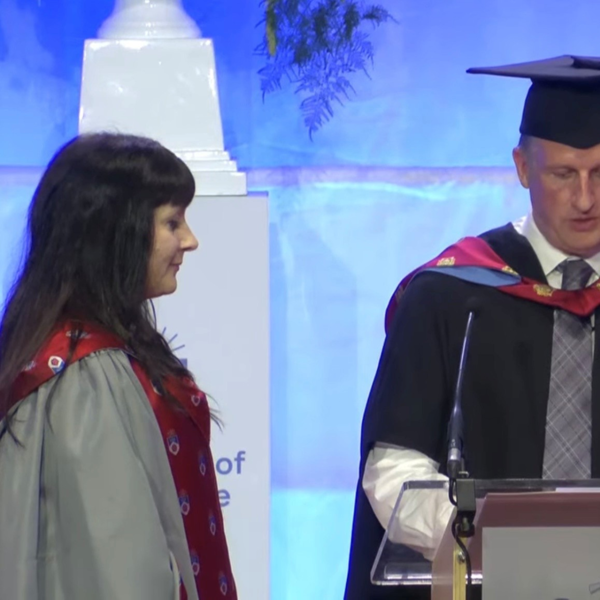
Congratulations to Dr Claire Thomas on Graduating with Her Professional Doctorate! 🎓

Voice Study Centre
Wednesday 15th July 2026Congratulations to Dr Claire Thomas on graduating with her Professional Doctorate in Elite Performance. We celebrate this significant milestone and recognise her dedication to voice research, vocal pedagogy, and higher education.
Read More...
Voice Study Centre Graduation 2026
Voice Study Centre
Friday 10th July 2026Voice Study Centre Graduation 2026! View all the photos from the day...
Read More...
Course Reviews
Unclenching the Jaw: Key Takeaways from Our Short Course with Walt Fritz
Voice Study Centre
Friday 10th July 2026We recently welcomed back international manual therapy expert Walt Fritz, PT, for an insightful short course exploring jaw tension through a modern physiotherapy lens. Attended by a diverse group of vocal coaches, singing teachers and SLPs, the session challenged traditional, purely physical models of tension and offered a more holistic, client-centred approach. Whether you missed the live event or want a quick refresher, here are the core themes and practical strategies from the course.
Read More...