Teaching singing is an unregulated profession and therefore there are no specific singing teacher qualifications required. However, many modern singing teachers and vocal coaches partake in Continuing Professional Development (CPD) courses to expand their knowledge of voice pedagogy, which aids in developing their teaching skills and in turn benefits their students.
Voice pedagogy (or vocal pedagogy) is the term used for the study of singing. It covers the physical aspects of singing (e.g. anatomy of the vocal folds, posture/alignment, breathing) and its artistic features (e.g. vocal styles, vocal registration, voice classification), as well as many other interesting topics. As a singing teacher, it is important to understand the varying knowledge needed to teach different genres and/or styles of singing and, with this in mind, it is deemed essential for a prospective singing teacher to have a solid comprehension of voice pedagogy.
In a competitive industry, CPD training gives the teacher the opportunity to establish themselves and differentiate from their peers. For example, singing teachers may develop a specific method of teaching and/or choose to train a selective group of students (classical singers, musical theatre performers, etc.). Some professional voice users and vocal coaches may also wish to develop a specialist understanding of areas such as performance coaching, singing for health or vocal health (including voice disorders related to singing).
Voice Study Centre offers a wide range of online courses to aid CPD and facilitate voice pedagogy learning. Our comprehensive MA Professional Practice (Voice Pedagogy) programme provides a flexible pathway for you to focus on your chosen research area within the broad field of voice pedagogy, and content is rapidly expanding to include emerging themes such as vocal habilitation and neuroscience.
There are also immersive weekly short courses as well as some even more in-depth longer courses and certificates which are accredited by The Institute of Training and Occupational Learning (ITOL). We even operate our own Voice Professional Training CPD Award Scheme – find out more here.
In conclusion, although there are no set qualifications required in order to begin your career as a singing teacher, a strong understanding of voice pedagogy (and its many elements) should be regarded as necessary.
Recent Posts
Student Interviews
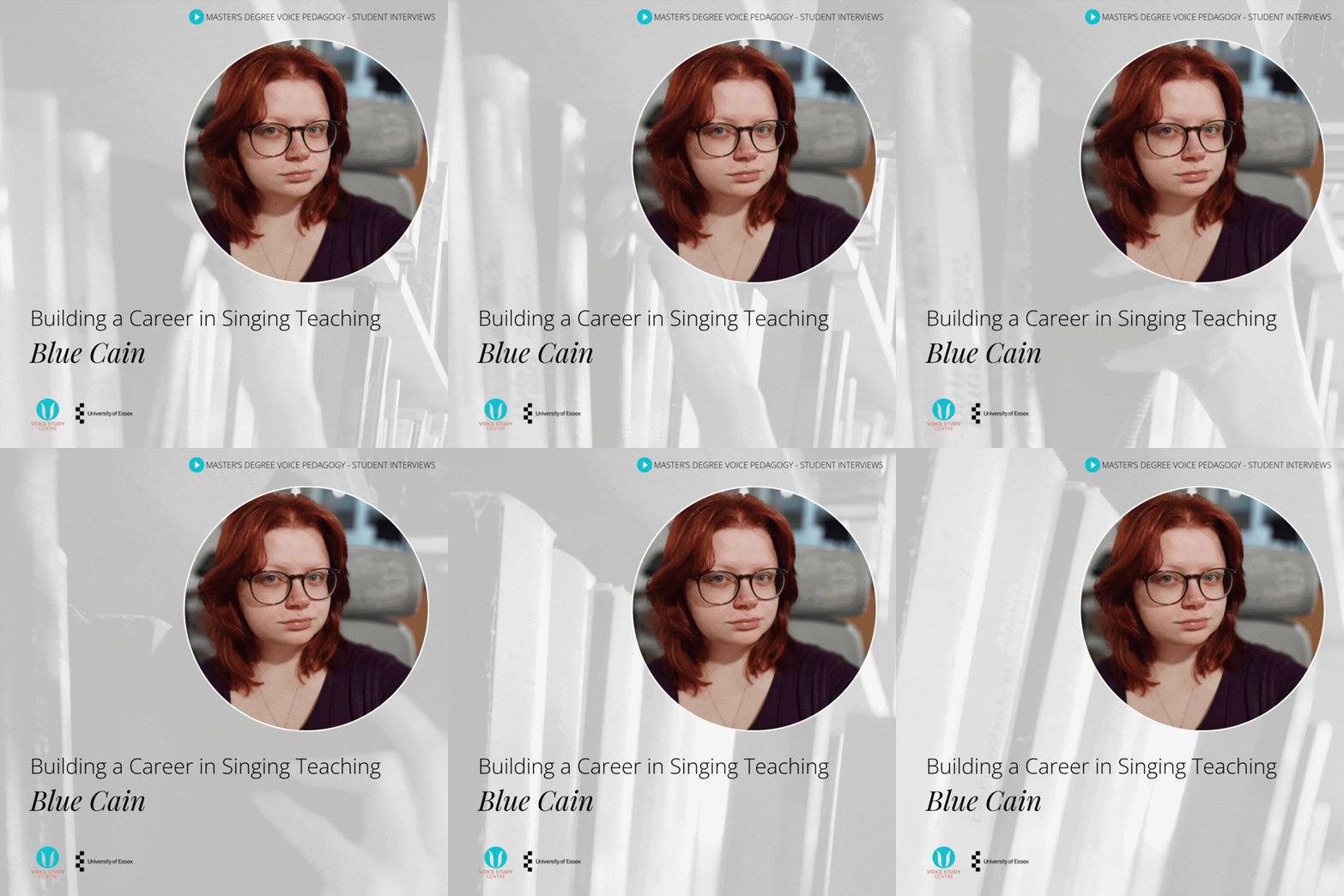
How the MA Voice Pedagogy helped Blue Cain build a career as a singing teacher

Voice Study Centre
Wednesday 5th August 2026When Blue Cain joined the MA Voice Pedagogy, they weren't an established singing teacher. In this interview, they share how the programme helped them launch a career in singing teaching, discuss their experience of studying online with ADHD, and reflect on their research into gender-diverse voices.
Read More...
Course Reviews
Masterclass Insights: Applying the Meisner Technique to Singing with Jillian Paige
Voice Study Centre
Tuesday 4th August 2026Yesterday, the Voice Study Centre recently welcomed back Jillian Paige, founder of Meisner in Music, for an interactive workshop exploring how Sanford Meisner’s renowned acting methodology can be transformed into a practical framework for vocalists. While traditional acting approaches often prioritize internal character analysis or objective-driven choices, the Meisner Technique operates on a foundational principle: to sing freely and express fully, your focus must be directed outward. So what did we learn?
Read More...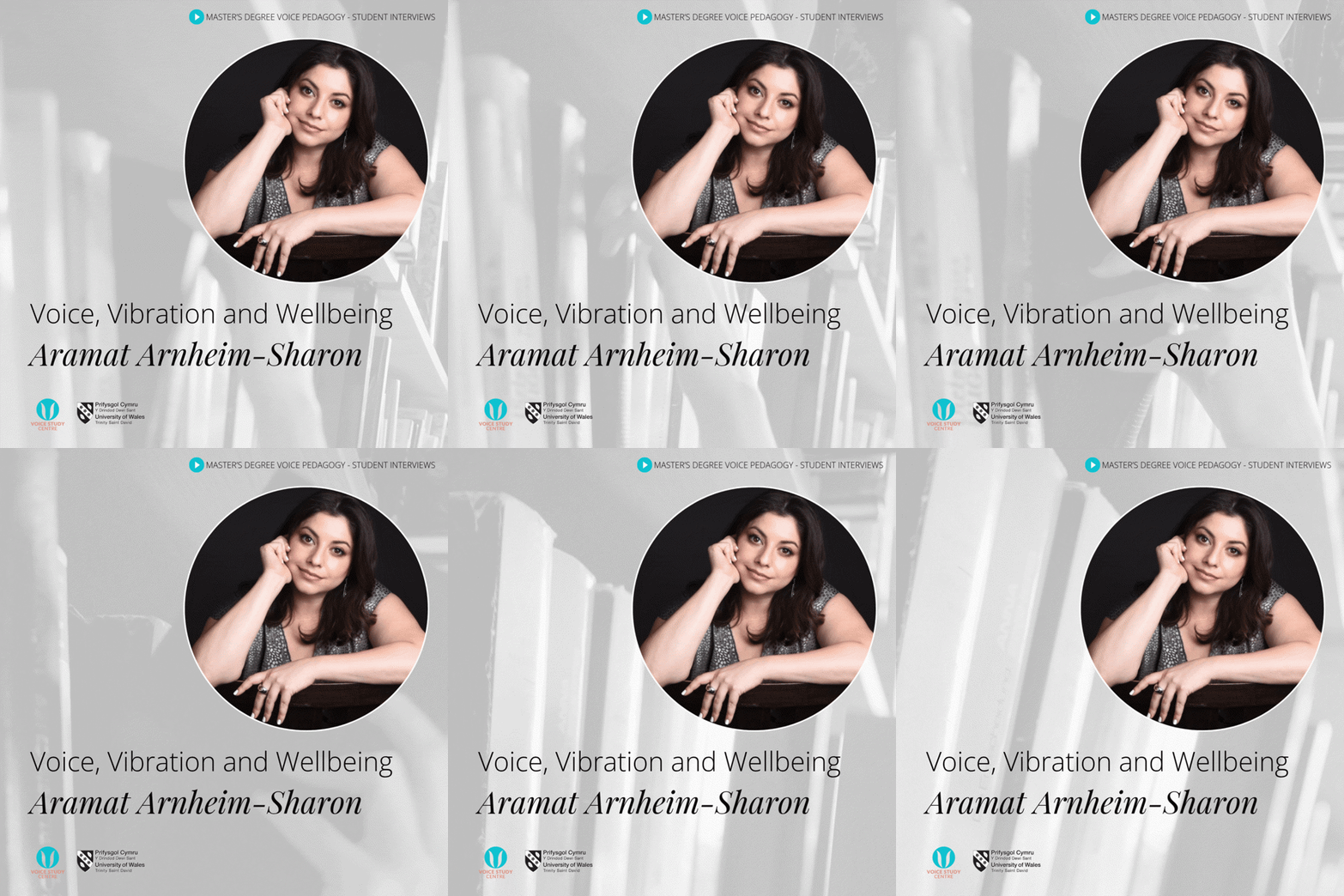
Blog
How MA Voice Pedagogy Student Aramat Arnheim-Sharon Contributed to Published Voice Research
Voice Study Centre
Wednesday 29th July 2026Watch our interview with MA Voice Pedagogy student Aramat Arnheim-Sharon as she discusses her contribution to a published research chapter exploring voice, vibration, wellbeing and emerging health research. Discover how postgraduate study supported her journey into academic research, and hear about her current MA research and the development of new tools for voice pedagogy.
Read More...