
Championing neurodiversity, wellbeing and inclusion
As complex beings, no-one fits into one category, and no two profiles are identical. Do-It recognises this and provides an instant holistic report, outlining specific strengths and challenges the individual may have. Voice Study Centre aims to utilise these cognitive profiles to effectively implement personalised student support from the start. The DO-IT Profiler plays a crucial role in Voice Study Centre’s mission to support all students, particularly those who may be neurodivergent. As we continue to embrace the diverse needs of our student body, the DO-IT Profiler stands as a key tool in ensuring that every student can reach their full academic potential, embracing cognitive differences.
The Do-It Profiler has a vast number of features to make its systems intuitive and inclusive to those with neurodiverse brains. Establishing a web-based modular screening and assessment system, minimal training is required to use the neurodiversity screener. Generating an instant and in-depth report flagging signs of conditions such as dyspraxia, dyslexia, autism, and ADHD, our staff are able to process data and implement support aids quickly and effectively. This system is used widely in the education, health, social, employment and justice settings, as it reduces administrative burdens and enables more effective interpersonal communication. Developed by specialists with extensive experience working in neurodevelopmental services and research over more than 10 years, the Do-It Profiler is solely evidence informed. With the fundamental frameworks based on exhaustive research, this Profiler delivers results with extreme accuracy.
Taking a person-centred approach, Do-It requires multiple sources, from teachers or parents, to make an accurate calculation. Delivering instant functional guidance, this system can provide insight into the individual’s possible next steps, speeding up the diagnostic process. Localised information can be added to the system to tailor the support to that individual, suggesting local agencies, clinics, and support groups. Upon entering information, the Profiler’s layout is designed to reduce administrative burden, aiding those who struggle with cognitive overload. For those with processing difficulties, coloured overlays and spoken text that can be translated into multiple languages is available.
We also provide all students with 24/7, free online counselling sessions. These services provide immediate access to mental health support, ensuring that students can receive help whenever they need it, regardless of the time of day. To learn more about this service, click here.
Recent Posts
Student Interviews
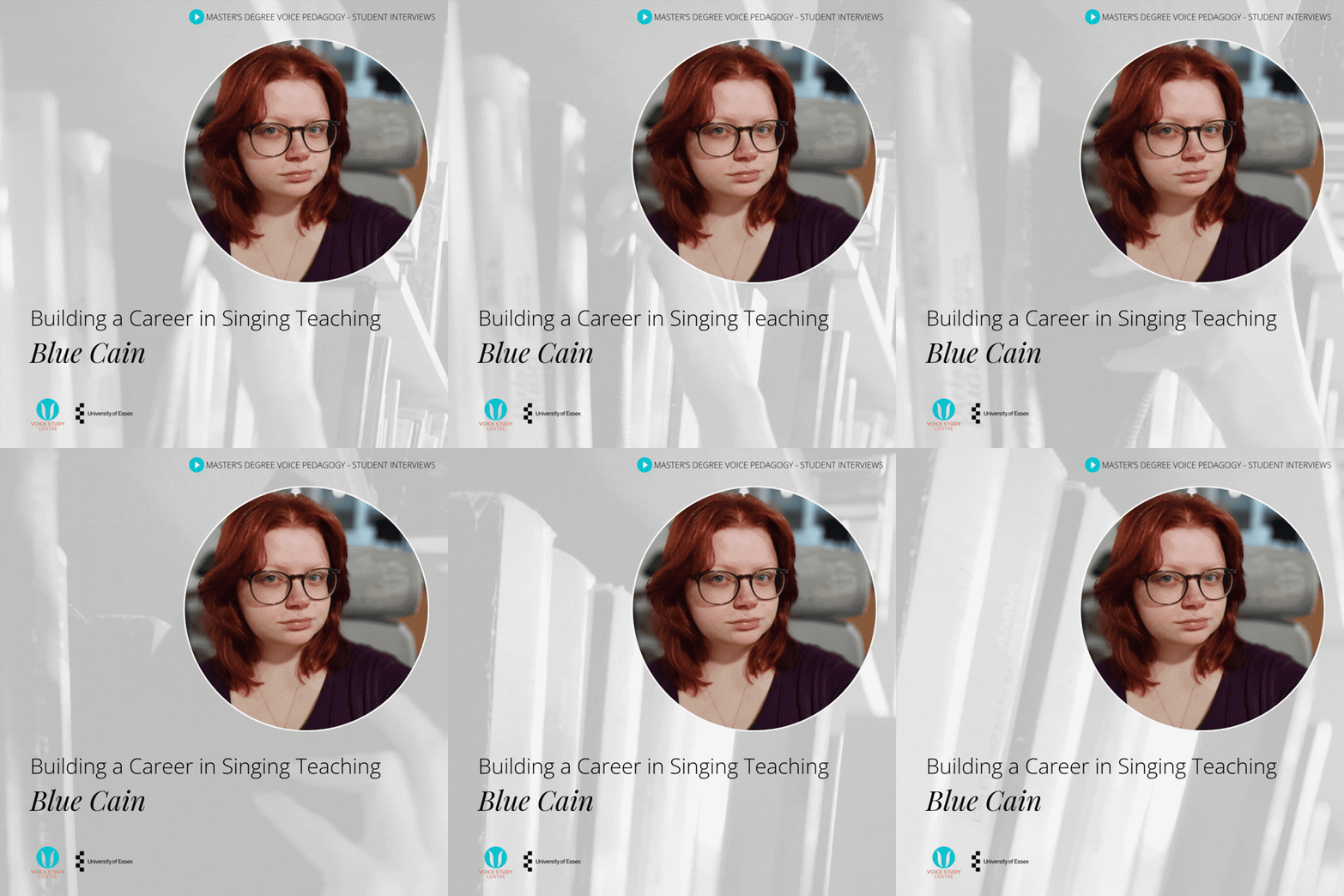
How the MA Voice Pedagogy helped Blue Cain build a career as a singing teacher

Voice Study Centre
Wednesday 5th August 2026When Blue Cain joined the MA Voice Pedagogy, they weren't an established singing teacher. In this interview, they share how the programme helped them launch a career in singing teaching, discuss their experience of studying online with ADHD, and reflect on their research into gender-diverse voices.
Read More...
Course Reviews
Masterclass Insights: Applying the Meisner Technique to Singing with Jillian Paige
Voice Study Centre
Tuesday 4th August 2026Yesterday, the Voice Study Centre recently welcomed back Jillian Paige, founder of Meisner in Music, for an interactive workshop exploring how Sanford Meisner’s renowned acting methodology can be transformed into a practical framework for vocalists. While traditional acting approaches often prioritize internal character analysis or objective-driven choices, the Meisner Technique operates on a foundational principle: to sing freely and express fully, your focus must be directed outward. So what did we learn?
Read More...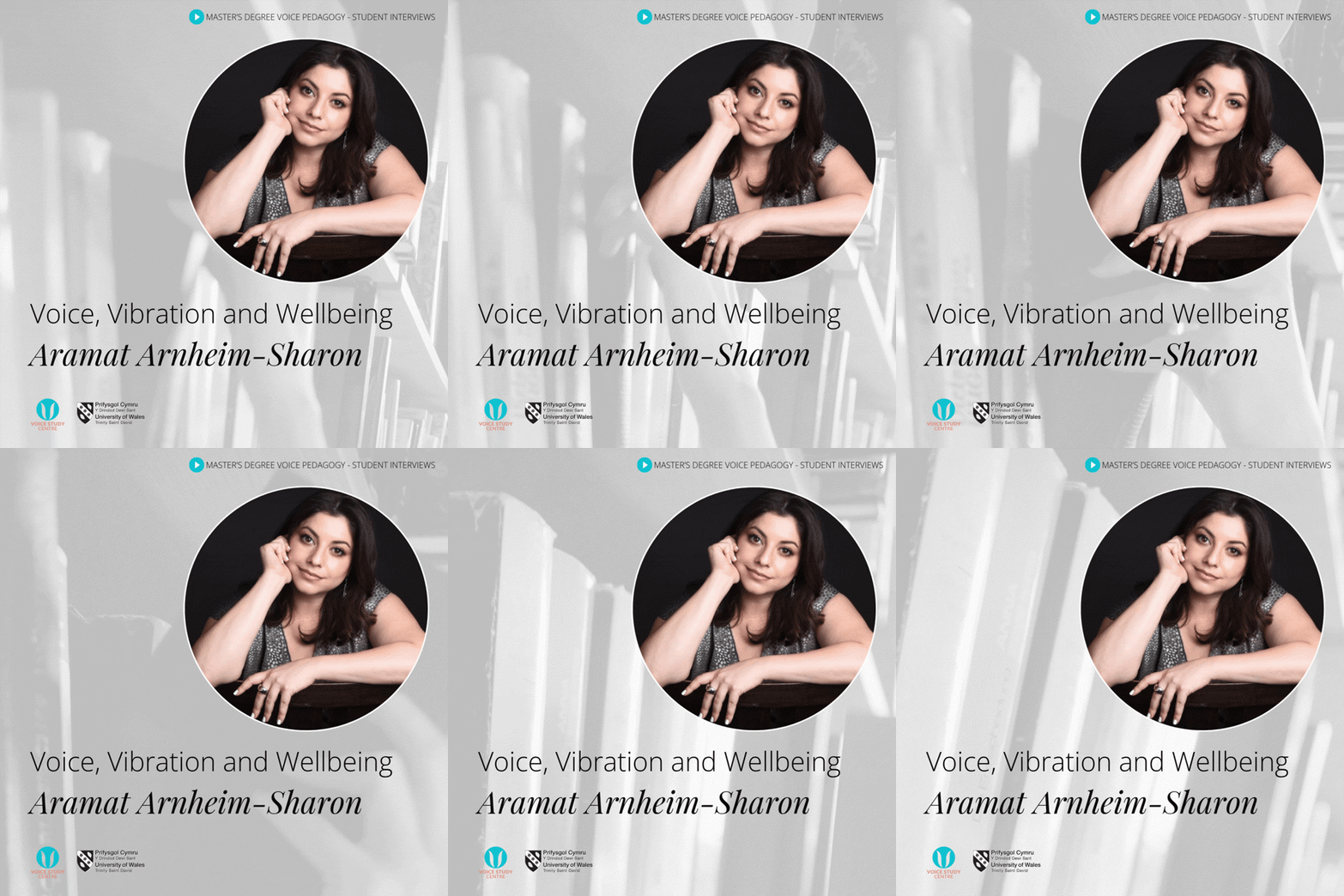
Blog
How MA Voice Pedagogy Student Aramat Arnheim-Sharon Contributed to Published Voice Research
Voice Study Centre
Wednesday 29th July 2026Watch our interview with MA Voice Pedagogy student Aramat Arnheim-Sharon as she discusses her contribution to a published research chapter exploring voice, vibration, wellbeing and emerging health research. Discover how postgraduate study supported her journey into academic research, and hear about her current MA research and the development of new tools for voice pedagogy.
Read More...