Beyond 4/4 Time
Thursday 28th October 2021, 5:00 PM - 7:00 PM (London Time)
Vocal exercises are the bed rock of vocal practice and they can be used to develop a singer’s musicianship alongside technique. Just as a train track has two rails to stay balanced, it is proposed by the presenter that a “two-track” approach to a singer’s development would be equal emphasis on technique AND musicianship throughout training, as opposed to the more “monorail” emphasis on technique alone. To use another metaphor, we can stand on one leg but we are more balanced standing on two. As the eminent classical pedagogue, Richard Miller, sagely said: “Be first a musician and second a singer”. But how can this objective be achieved in a lesson context?
In her presentation last year – “Beyond The Major Scale” – Kim Chandler suggested that there is currently an over-emphasis and over-reliance on major scale-based patterns in vocal exercises at the expense of the appetising array of other musical patterns that vocal melodies are constructed on, e.g. scales such as the Natural Minor & the Pentatonics and modes such as the Dorian & Lydian.
This presentation is the rhythmic counterpart, suggesting that there is also an over-abundance of songs written in 4/4 time in pop repertoire at the expense of other possibilities.
From analysing and singing through pop song excerpts across the eras, this interactive workshop will introduce music based on a range of other time signatures including odd meters, compound meters, cross rhythms etc. The presenter will then show how rhythmic-based work can be applied to technically-demanding vocal exercises that are also musically challenging. This concept can be applied to any style of singing and doubles the educational value of exercises.
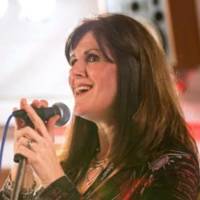
Kim Chandler
Kim Chandler (MMus BMusEd) is a renowned contemporary vocal coach & session singer. She runs a busy private studio in Marbella, Spain, where she coaches an elite clientele of stadium band singers, including BRIT award winners & GRAMMY nominees, artists from a range of genres, professional singers and vocal coaches online.
Sorry, this is an archived short course...
We have plenty of upcoming short courses coming soon. See details of some of them below or look at the full list of short courses.

Monday 3rd August 2026
1:30 PM - 2:30 PM
Tuesday 4th August 2026
1:30 PM - 2:30 PM
Wednesday 5th August 2026
1:30 PM - 2:30 PM
Thursday 6th August 2026
1:30 PM - 2:30 PM
Friday 7th August 2026
1:30 PM - 2:30 PM
(London Time)
Level Two Certificate in Accents and Phonetics with Louisa Morgan

Louisa Morgan
Build on your foundational knowledge of accents and phonetics in this week‑long lunchtime course designed specifically for voice teachers. Whether you have completed our Level 1 Certificate or already possess a basic working knowledge of phonetics and accent work, this Level 2 course will help you deepen your skills, sharpen your analytical ear, and expand your practical toolkit for teaching.


Tuesday 11th August 2026
5:00 PM - 7:00 PM
(London Time)
Redefining Ethical Practice in Voice Teaching!

Dr Justin John Moniz
Join Dr Justin John Moniz as he examines ethical practice in voice teaching through a structured, evidence-informed framework for sustainable, student-centered pedagogy. Although voice teaching operates outside formal licensure models common to allied professions, teachers hold significant responsibility for students’ vocal function, artistic development, and long-term well-being. This course addresses that gap through a five-part paradigm grounded in the NATS Code of Ethics, contemporary research, and applied studio practice.
Wednesday 12th August 2026
5:00 PM - 6:00 PM
(London Time)
MA Voice Pedagogy: Online Information Session & Q&A

Debbie Winter
Considering our MA Voice Pedagogy? Join our Director for a focused online presentation and discussion to explore the course, ask questions, and discover whether postgraduate study at Voice Study Centre is right for you.