One More Time with Feeling; The Use of Emotion for Training Singers
Tuesday 1st September 2020, 5:00 PM - 6:00 PM (London Time)
How does emotion affect the voice, and can it be harnessed as a tool in Western classical vocal pedagogy? Eminent voice pedagogues do use emotion as a pedagogical tool and have described their experience of its usefulness anecdotally (Bozeman, 2013 and 2017; Chapman, 2007; Williams, 2019). Scientists have striven to measure emotionally produced acoustic changes in the voice; these changes can be heard and even accurately perceived by the listener (Scherer, 1986). Muscular changes occur with emotion (Scherer, 1986) in all three components of the vocal apparatus; breathing, vocal folds and vocal tract (Sundberg, 1987), and these changes affect voice acoustics (Laver, 1980). Research shows these emotional effects on vocal acoustics to be comparable in both the speaking and singing voice (Scherer, 2015). Scherer (1986) predicted these changes in his Component Patterning Model of Vocal Affect Expression and subsequent research has largely proven his model which predicts the acoustic result of an emotion based on physiological responses.
This 1 hour webinar will outline;
- Darwin’s phylogenic theory of emotional effect and his theory of the early origins of vocalised emotion.
- Historical use of emotion and its description in the early singing treatise.
- The emotions used anecdotally by pedagogues
- The work of Professor Klaus Scherer and his early predictions of the effect of emotion on voice acoustics based on; his own emotion model of physiological response and, the work of phonetician Professor John Laver who described the acoustic change for different muscular actions of the vocal apparatus. Scherer went on to ‘prove’ his predictions with his own and other scientists research on acoustics of vocalised emotion.
- Current research on the singing voice and the effect of emotion on acoustics; how does the research compare to the emotions used by pedagogues in the studio?
- Interesting correlations with vowel use and emotion.
- Possible ways to elicit emotion in voice teaching; tips from the scientists.
- Kate will present a diagram she has compiled based on a two dimensional model of emotion with the results of the latest acoustic data, the emotions studied, as well as the emotions used anecdotally by pedagogues.
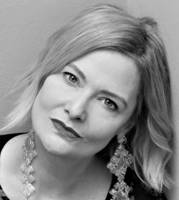
Katrina Sheppeard
Katrina Sheppeard is one of the UK’s most exciting up and coming dramatic sopranos. Since moving from Australia to London in 2008...
Sorry, this is an archived short course...
We have plenty of upcoming short courses coming soon. See details of some of them below or look at the full list of short courses.


Tuesday 23rd June 2026
5:00 PM - 7:00 PM
(London Time)
Introduction to Vocal Psychotherapy: Songs of the Self

Dr. Diane Austin
This presentation draws on the methods and techniques of Vocal Psychotherapy, a new in-depth model of music psychotherapy developed by Dr. Austin, that incorporates breath work, natural sounds, vocal improvisation, and songs and dialogue within a client and therapist relationship to facilitate intrapsychic and interpersonal change and growth.

Thursday 2nd July 2026
5:00 PM - 7:00 PM
(London Time)
Unclenching the Jaw: Options from the Physio Lens

Walt Fritz
“Jaw tension” is one of many potential problems facing the singer, and can cause a direct negative impact on the performance in both direct and indirect ways. The underlying cause of jaw issues is attributed to numerous factors (technique, posture, strength, range of motion, etc.), making it often difficult to identify common denominators. Join Walt Fritz as he examines the evidence supporting stretching, strengthening, and manual therapy interventions to address jaw-related concerns in vocal performers, taking into account their unique needs.
Monday 6th July 2026
5:00 PM - 7:00 PM
Friday 10th July 2026
5:00 PM - 7:00 PM
Monday 13th July 2026
5:00 PM - 7:00 PM
Friday 17th July 2026
5:00 PM - 7:00 PM
Monday 20th July 2026
7:00 PM - 7:00 PM
Friday 24th July 2026
5:00 PM - 7:00 PM
(London Time)
Certificate in Foundations of Vocology with Adam Roberts

Adam Roberts
This 30-hour Vocology Cohort Intensive provides a comprehensive overview of basic vocal anatomy, physiology, and theories of voice production & perception, fundamentals of vocal health, pathology, evaluation, performance, and habilitation of the speaking and singing voice, and a survey of research, resources, and professional opportunities. Each week, advanced students contribute to cohort-centred learning with additional resources, discussion facilitation, and critical analysis. The course assessment will also be useful for those who wish to prepare for the PAVA recognised designation.