Singing With Your Whole Self: An Introduction to Feldenkrais Awareness Through Movement
Thursday 20th July 2023, 5:00 PM - 7:00 PM (London Time)
How does one develop an internal feel for what sounds good? How do you learn to use all of yourself when singing? What is the relationship between the felt (kinesthetic) sense, effort, and good sound?
The intention of every committed voice teacher is to guide the student to find the freest, most beautiful, expressive sound and to develop that voice until it becomes consistently accessible.
The Feldenkrais Method is a self-discovery process using movement Its aim is to produce an individual organized to perform with minimum effort and maximum efficiency. Efficient organization is developed using the “organic” learning style of our early childhood; the way we learned to hold our head up, crawl, and so on. As such, it is an open-ended developmental learning process which, like making music, offers infinite possibilities for refinement. The movements are simple, gentle, pleasant, exploratory, and fun. They are usually repeated a number of times to clarify and enhance performance. The focus is always on the how to of the movement, not the how much, how fast, or how hard. The movement always starts where the person is now. People are asked only to perform what they can do comfortably; they are discouraged from moving outside their comfort range.
During our time together, we explore fundamentals of the Feldenkrais Method, including how its originator, Moshe Feldenkrais, developed this approach and what constitutes Awareness Through Movement (ATM).
This is an interactive, experiential course in which participants will learn about the method and be led through several ATMs (some short mini-ATMS, others a portion of a full ATM).
Workshop Description:
- Introduction and overview of the Feldenkrais Method
- Initial focus on body, breath and voice
- “Pre-test” before Feldenkrais Awareness Through Movement experience
- Participants are guided through selected ATM lessons (Mini-ATMs and excerpted full lessons)
- “Post-test” discoveries and discussion
- If time, volunteers may receive a short ATM lesson specific to individual needs
- Question/ answer discussion and conclusion
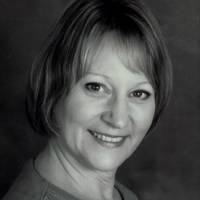
Elizabeth Blades
Elizabeth Blades holds both Doctor of Musical Arts and Masters of Music Degrees from the
Eastman School of Music in Rochester, NY...
Attend this course for as little as £22 as part of the Voice Professional Training CPD Award Scheme.
Learn MoreSorry, this is an archived short course...
We have plenty of upcoming short courses coming soon. See details of some of them below or look at the full list of short courses.


Tuesday 24th November 2026
5:00 PM - 7:00 PM
(London Time)
The Lemma Dilemma: Teaching Voice and Speech through a Linguistic Lens!

Ashleigh Reade
For voice and speech teachers, the importance of “the thought” is almost a given. Text comes to life when it is fueled by an external stimulus; we breathe in response to an image, a concept, a need we wish to express, then transmit that to our listener on the voice. In psycholinguistic models of speech processing and production, the lemma is the mental representation of a concept that contains both semantic and syntactic meaning, linking an idea to the sounds needed to express the idea. Join Ashleigh Reade as explores how to bridge the gap between actor and text, examining how psycholinguistics can support our voice and speech teaching.

Monday 30th November 2026
6:00 PM - 8:00 PM
(London Time)
Bringing Colour Theory into IPA Vowels!

Siobhan Doherty Buffett
Step into a multi-sensory approach to phonetics with Siobhan Doherty Buffett, certified teacher of Knight-Thompson Speechwork™. In this engaging session, Siobhan introduces a new Colour Theory Map of the International Phonetic Alphabet (IPA) Vowel Chart - a visual tool designed to demystify complex phonetic concepts, deepen anatomical awareness, and transform how we teach and practice narrow transcription. Whether you are a voice teacher, speech-language pathologist, linguist, or performer, this interactive exploration offers a fresh, intuitive lens to help both you and your students visualize the subtle mechanics of vowel production!

Thursday 3rd December 2026
5:00 PM - 7:00 PM
(London Time)
Singing and Parkinson’s Disease: Overview of the Evidence to Date

Dr Abigail Webb
Parkinson’s Disease is a progressive neurological disorder affecting around 166,000 people in the UK. It is characterised by a significant reduction in dopamine production that in turn causes impairments across several motor and non-motor functioning. A 2025 review indicated that singing may benefit certain aspects of speech production in those affected, and in the last decade, a collection of research studies has explored the role of singing specifically in symptom management of Parkinson’s. Join Dr Abigail Webb, as she brings together evidence to date of the impact of singing for people living with Parkinson’s.