Staying In Lane: Exploring The Boundary Line Between Teaching Singing And Therapeutic Practice
Thursday 2nd December 2021, 2:00 PM - 4:00 PM (London Time)
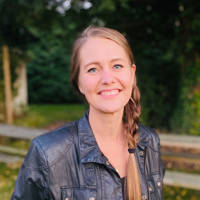
Kate Cubley
Kate Cubley (BA (Hons), MA) is an advanced level Voice Coach, Singing Teacher, singer and researcher working predominantly from her private studio in Cheshire...
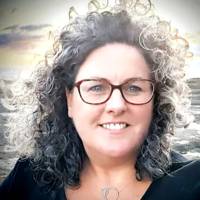
Pippa Anderson
Pippa Anderson holds an Mlitt (Master of Letters) in Music, and is also a senior lecturer and vocal health consultant for the musical theatre programme at Leeds Conservatoire and Clinical Vocal Rehabilitation Specialist at Freeman Hospital.

Natalie Eastwood
Natalie Eastwood qualified as a speech and language therapist from Sheffield University and has over 18 years of experience working with voice and swallowing...
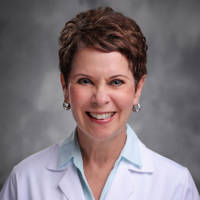
Leda Scearce
Soprano Leda Scearce has been featured in leading roles with the National Opera Company, Hawaii Opera Theatre, Long Leaf Opera Festival, Triangle Opera...
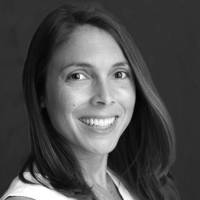
Julia Gerhard
Julia Gerhard is a speech pathologist and singer with a passion for interdisciplinary voice education and voice rehabilitation. She earned a doctorate in musical arts...
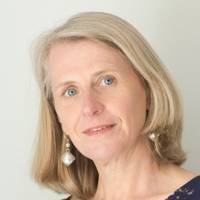
Dr Jenevora Williams
Dr Jenevora Williams is a leading exponent in the field of vocal health and singing teaching. After a successful career in Opera, Jenevora turned her attention...

Professor Yvonne Gonzales Redman
Yvonne Gonzales Redman is a Professor of Voice and Pedagogy and Chair of the Voice Area at the University of Illinois Urbana-Champaign and a member of the American Academy of Teachers of Singing. She began her musical career as a Vocal Performance major at Stephen F. Austin State University in Nacogdoches, Texas. Upon graduation, the Houston native was a winner of both the Metropolitan Opera National Council Auditions and the Houston Grand Opera Eleanor McCollum Award.
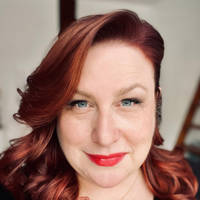
Melanie Tapson
Melanie Tapson is a professional singer, Singing Voice Specialist and clinical voice pathologist with a busy hybrid voice practice in Toronto. She holds a BFA (jazz performance, voice/drums), a BEd (senior vocal music/drama), and an MSc in speech pathology. She has performed on international stages including for Disney Cruise Line and touring with Juno Award winning groups, and she continues to sing and do voiceover work when time permits.
Sorry, this is an archived short course...
We have plenty of upcoming short courses coming soon. See details of some of them below or look at the full list of short courses.
Tuesday 18th August 2026
3:00 PM - 5:00 PM
Tuesday 25th August 2026
3:00 PM - 5:00 PM
Tuesday 1st September 2026
3:00 PM - 5:00 PM
Tuesday 8th September 2026
3:00 PM - 5:00 PM
Tuesday 15th September 2026
3:00 PM - 5:00 PM
Tuesday 22nd September 2026
3:00 PM - 5:00 PM
(London Time)
Musical Theatre Vocal Pedagogy Certificate

Kevin Wilson
Join Kevin Wilson for this six-part certificated course, offering an in‑depth, practical exploration of contemporary voice teaching for musical theatre. Across six focused classes, participants develop a systematic approach to vocal technique, diagnosis, and repertoire selection that reflects the stylistic, physical, and emotional demands of the genre. The curriculum integrates vocal science, embodied voice work, registration theory, and stylistic awareness across the five major sub‑genres of musical theatre.

Wednesday 26th August 2026
5:00 PM - 7:00 PM
(London Time)
The Vocal Tract and Singing: A Research Overview!

Dr Brad Story
Fine control of the vocal tract shape is important for producing acoustic characteristics that may be targeted in singing. Join Dr Brad Story as he focuses on how the vocal tract shape can be tuned (i.e. modified) in both large and subtle ways to enhance the signal radiated from a singer to an audience. The session will include the vocal tract shape contributions to the ‘singing formant’, enhancement of vibrato, and harmonic/formant alignment.
Thursday 3rd September 2026
5:00 PM - 7:00 PM
(London Time)
Common Medical Diagnoses and Treatments in Voice Patients

Dr Robert Sataloff
Join world-renowned ENT surgeon, author, and professional singer Professor Robert Sataloff for this short course on common medical diagnoses and treatments in voice patients. Whether you are treating voice disorders or navigating the world of academic research, this course provides an excellent opportunity to learn from a true expert in the field. This course is suitable for voice teachers, singers, speech-language pathologists, ENT specialists, and anyone passionate about advanced voice care and credible research.