The Acoustics and Mechanics of Whistle Voice
Thursday 9th April 2026, 5:00 PM - 7:00 PM (London Time)
Course Overview
This course dives deep into the physiological and acoustic mysteries of the human "whistle voice"—the highest register of the human vocal range. While often compared to a flute or a lip whistle, recent research suggests the biological reality is far more complex than simple aerodynamics.
We will move beyond the "damping" theories of the past and explore the three-layer tissue dominance model, focusing on how the epithelium functions as the primary pitch-control layer. By analyzing the transition from M1 (chest) and M2 (head) into the M3 register, students will gain a sophisticated understanding of laryngeal mechanics and the biomechanics of high-pitched vocalization.
Key Learning Objectives
-
Deconstruct the Three-Layer Scheme: Understand the functional roles of the muscle, ligament, and epithelium in vocal fold vibration.
-
The M3 Register Mechanism: Explore the evidence for the M3 mechanism and its distinction from the M1 and M2 registers.
-
Aerodynamics vs. Biomechanics: Evaluate the evidence against "purely aerodynamic" whistle theories and the "partial vibration" (damping) hypothesis.
-
Vocal Resonance in the 2–5 kHz Range: Analyze the acoustic properties of high-frequency phonation and why this specific frequency range challenges traditional vocal models.
Who Is This Course For?
This course is designed for vocologists, speech-language pathologists, advanced vocal pedagogues, and acoustic scientists who want to stay at the cutting edge of laryngeal research.
Note: A foundational understanding of the Source-Filter Theory and basic laryngeal anatomy is recommended, as we will be challenging several "standard" textbook definitions of the whistle register.
🏷️ Price £30 (UK VAT inclusive)
🎥 Recording automatically sent to all who book (even if you cannot attend live)
▶️ Rewatch as many times as you like
📜 Certificate of attendance available
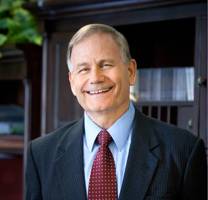
Dr Ingo Titze
Dr Ingo Titze, educated as a physicist (Ph.D.) and engineer (M.S.E.E.), has applied his scientific knowledge to a lifelong love of clinical voice and vocal music. He has written over 500 publications and six books in voice production. He is currently Senior Scientist at the University of Utah Center for Vocology and Chairman of the Board of the National Center for Voice and Speech.
Attend this course for as little as £22 as part of the Voice Professional Training CPD Award Scheme.
Learn MoreSorry, this is an archived short course...
We have plenty of upcoming short courses coming soon. See details of some of them below or look at the full list of short courses.

Monday 3rd August 2026
1:30 PM - 2:30 PM
Tuesday 4th August 2026
1:30 PM - 2:30 PM
Wednesday 5th August 2026
1:30 PM - 2:30 PM
Thursday 6th August 2026
1:30 PM - 2:30 PM
Friday 7th August 2026
1:30 PM - 2:30 PM
(London Time)
Level Two Certificate in Accents and Phonetics with Louisa Morgan

Louisa Morgan
Build on your foundational knowledge of accents and phonetics in this week‑long lunchtime course designed specifically for voice teachers. Whether you have completed our Level 1 Certificate or already possess a basic working knowledge of phonetics and accent work, this Level 2 course will help you deepen your skills, sharpen your analytical ear, and expand your practical toolkit for teaching.
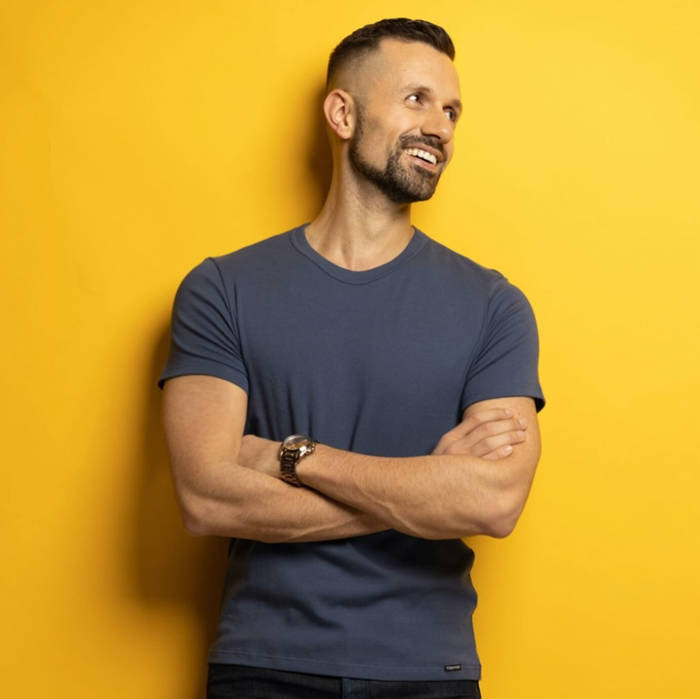

Tuesday 11th August 2026
5:00 PM - 7:00 PM
(London Time)
Redefining Ethical Practice in Voice Teaching!

Dr Justin John Moniz
Join Dr Justin John Moniz as he examines ethical practice in voice teaching through a structured, evidence-informed framework for sustainable, student-centered pedagogy. Although voice teaching operates outside formal licensure models common to allied professions, teachers hold significant responsibility for students’ vocal function, artistic development, and long-term well-being. This course addresses that gap through a five-part paradigm grounded in the NATS Code of Ethics, contemporary research, and applied studio practice.
Wednesday 12th August 2026
5:00 PM - 6:00 PM
(London Time)
MA Voice Pedagogy: Online Information Session & Q&A

Debbie Winter
Considering our MA Voice Pedagogy? Join our Director for a focused online presentation and discussion to explore the course, ask questions, and discover whether postgraduate study at Voice Study Centre is right for you.