The Science of Sound: Optimizing Vocal Acoustics for Contemporary Styles!
Tuesday 4th November 2025, 3:00 PM - 5:00 PM (London Time)
Course Description:
This course explores the scientific principles underpinning vocal production, acoustics, and the care of the singing voice, drawing from both foundational texts and contemporary research. Students will engage deeply with concepts from Titze’s Principles of Voice Production and Bozeman’s Practical Vocal Acoustics, including the nature of sound, pressure waveforms, harmonics, formants, and the spectral envelope. Emphasis is placed on understanding both linear and non-linear source-filter models, highlighting how the glottis produces sound and how the vocal tract selectively reinforces harmonics to enhance vocal power, timbre, and efficiency.
Through analysis of pitch, timbre, spectral slope, and inertive reactance, students will learn how these principles apply to varied vocal styles, from classical operatic singing to theater belting. The course also integrates pedagogic applications, offering strategies for body alignment, breath management, onset, laryngeal posture, vowel tuning, and vocal coordination, emphasizing sustainable and expressive performance.
Practical applications include formant tuning for different voice types, exploration of source-filter interactions, and understanding how acoustic properties of the vocal tract influence vocal fold vibration. By connecting acoustical theory to performance and pedagogy, students will gain the tools to make informed, efficient, and artistically nuanced choices for their own singing and for guiding others in vocal instruction.
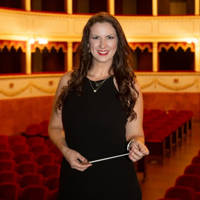
Dr Ana Flavia Zuim
Dr. Ana Flavia Zuim is a voice scientist and musical director whose research in vocal dosimetry has earned recognition from CBS and awards including the Van L. Lawrence Fellowship and the NYU Steinhardt Fellowship. With experience directing and performing in over 70 musical theater productions, she has been recognized for her work as a pianist, conductor, and musical director.Her research bridges the art and science of voice, informing both performance practice and clinical applications. This expertise has also made her a sought-after expert witness in forensic voice analysis.
Attend this course for as little as £22 as part of the Voice Professional Training CPD Award Scheme.
Learn MoreSorry, this is an archived short course...
We have plenty of upcoming short courses coming soon. See details of some of them below or look at the full list of short courses.

Monday 3rd August 2026
1:30 PM - 2:30 PM
Tuesday 4th August 2026
1:30 PM - 2:30 PM
Wednesday 5th August 2026
1:30 PM - 2:30 PM
Thursday 6th August 2026
1:30 PM - 2:30 PM
Friday 7th August 2026
1:30 PM - 2:30 PM
(London Time)
Level Two Certificate in Accents and Phonetics with Louisa Morgan

Louisa Morgan
Build on your foundational knowledge of accents and phonetics in this week‑long lunchtime course designed specifically for voice teachers. Whether you have completed our Level 1 Certificate or already possess a basic working knowledge of phonetics and accent work, this Level 2 course will help you deepen your skills, sharpen your analytical ear, and expand your practical toolkit for teaching.


Tuesday 11th August 2026
5:00 PM - 7:00 PM
(London Time)
Redefining Ethical Practice in Voice Teaching!

Dr Justin John Moniz
Join Dr Justin John Moniz as he examines ethical practice in voice teaching through a structured, evidence-informed framework for sustainable, student-centered pedagogy. Although voice teaching operates outside formal licensure models common to allied professions, teachers hold significant responsibility for students’ vocal function, artistic development, and long-term well-being. This course addresses that gap through a five-part paradigm grounded in the NATS Code of Ethics, contemporary research, and applied studio practice.
Wednesday 12th August 2026
5:00 PM - 6:00 PM
(London Time)
MA Voice Pedagogy: Online Information Session & Q&A

Debbie Winter
Considering our MA Voice Pedagogy? Join our Director for a focused online presentation and discussion to explore the course, ask questions, and discover whether postgraduate study at Voice Study Centre is right for you.