The Transient Theory of Human Voice Production with Dr Julian Chen
Sunday 16th April 2023, 5:00 PM - 7:00 PM (London Time)
This event is free-to-attend as part of our World Voice Day celebrations.

In 1957, French physiologist Philippe Fabre invented the electroglottograph, which can accurately determine the closing and opening instants of the glottis in vivo. In 1984, Donald Miller and Harm Schutte further placed two pressure sensors immediately above and below the glottis, measured the air pressures across the glottis.
This experimental evidence enabled a scientific understanding of human voice production.
And so a refined version of the transient theory of human voice production, the timbron theory, initially proposed by Leonhard Euler in 1727, is established. In this lecture, experimental output and the timbron theory of human voice production are presented in an easy to understand graphical format.
Content:
According to that theory, the time between two adjacent glottal closing instants accurately defines the pitch period, and the sound waveform in each pitch period contains full information on the timbre. A method of extracting glottal closing instants from sound waves and a graphical display, the pitch-synchronous spectrogram, are presented.
Among the samples of human voice, the sound recordings of Luciano Pavarotti are analyzed. Some characteristics of the master singer are shown, and hints of how to improve the quality and volume of voice are presented.
Finally, the theory and parametrization method for human voice developed in early 20th century, the source-filter theory and linear prediction coefficients (LPC), are outlined.
Comparing with the more accurate timbron theory and pitch-synchronous parametrization method, the deficiencies of the source-filter theory and the LPC method are discussed.
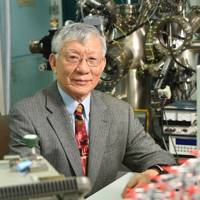
Dr Julian Chen
Julian Chen received a PhD in Physics from Columbia University in 1985, then joined IBM Research Division as a Research Staff Member...

World Voice Day
World Voice Day takes place on 16th April annually. It is acknowledged across the globe, with the main goal being to increase awareness of voice and voice issues.
Sorry, this is an archived short course...
We have plenty of upcoming short courses coming soon. See details of some of them below or look at the full list of short courses.

Monday 3rd August 2026
1:30 PM - 2:30 PM
Tuesday 4th August 2026
1:30 PM - 2:30 PM
Wednesday 5th August 2026
1:30 PM - 2:30 PM
Thursday 6th August 2026
1:30 PM - 2:30 PM
Friday 7th August 2026
1:30 PM - 2:30 PM
(London Time)
Level Two Certificate in Accents and Phonetics with Louisa Morgan

Louisa Morgan
Build on your foundational knowledge of accents and phonetics in this week‑long lunchtime course designed specifically for voice teachers. Whether you have completed our Level 1 Certificate or already possess a basic working knowledge of phonetics and accent work, this Level 2 course will help you deepen your skills, sharpen your analytical ear, and expand your practical toolkit for teaching.


Tuesday 11th August 2026
5:00 PM - 7:00 PM
(London Time)
Redefining Ethical Practice in Voice Teaching!

Dr Justin John Moniz
Join Dr Justin John Moniz as he examines ethical practice in voice teaching through a structured, evidence-informed framework for sustainable, student-centered pedagogy. Although voice teaching operates outside formal licensure models common to allied professions, teachers hold significant responsibility for students’ vocal function, artistic development, and long-term well-being. This course addresses that gap through a five-part paradigm grounded in the NATS Code of Ethics, contemporary research, and applied studio practice.
Wednesday 12th August 2026
5:00 PM - 6:00 PM
(London Time)
MA Voice Pedagogy: Online Information Session & Q&A

Debbie Winter
Considering our MA Voice Pedagogy? Join our Director for a focused online presentation and discussion to explore the course, ask questions, and discover whether postgraduate study at Voice Study Centre is right for you.