When we think of singing pedagogy, we often focus on the artistic and athletic demands of the voice-building range, refining tone, and mastering repertoire. But what happens when the very foundation of singing-the breath-is compromised by chronic illness? Dr. Goldenberg has some answers.
The Power of the "Quiet Breath"
In vocal pedagogy, we spend most of our time training the large, athletic inhalation required for performance. However, Dr. Goldenberg stresses that for individuals with lung disease, the quiet breath is the most functional breath to practice. * The Problem: Patients dealing with breathlessness often develop an acute fear of running out of air, leading to habitual over-breathing (hyperventilation). This ironically triggers a drop in carbon dioxide levels, causing a phenomenon known as air hunger, which activates the sympathetic nervous system (the fight-or-flight response).
- The Solution: Training the quiet breath-obligatorily nasal, low, and utilizing only one to two cups of air right in the "middle of the tank"-helps deactivate overworking chest muscles and calms the nervous system.
A Quick Grounding Tool: Hand Breathing
Dr. Goldenberg utilizes a technique called "hand breathing" to slow down the respiratory rate and ground panicky breathers.
How to do it: Hold up your hand and trace your fingers with your opposite index finger. Inhale through your nose only when you hit the knuckle, and exhale completely as you trace down toward your wrist. Repeat for all five fingers to naturally elongate the exhale and allow CO2 to safely stabilize.
Obstructive vs. Restrictive Lung Disease
To help the person in front of you, you must understand where the anatomy deviates from normal. Dr. Goldenberg breaks lung disorders down into two primary categories:
|
Disease Type |
Core Characteristic |
Common Conditions |
Pedagogical Focus |
|
Obstructive |
Narrowing of the airways; difficulty getting air out. |
COPD, Asthma, Cystic Fibrosis |
Emphasize prolonged exhales using fricatives, lip trills, or semi-occluded vocal tract (SOVT) exercises. |
|
Restrictive |
Reduction in chest/lung movement; difficulty getting air in. |
Pulmonary Fibrosis, Radiation Fibrosis |
Emphasize lateral rib cage mobility, full body stretches, and alignment modifications. |
Singing as "Coughing's Twin" (Airway Clearance)
One of the most profound segments of the lecture focused on mucus clearance. For patients with obstructive diseases, clearing thick secretions from the bronchioles is a constant, exhausting battle.
Because mucus is a non-Newtonian fluid, its viscosity (or thickness) changes under pressure oscillations. Dr. Goldenberg’s own published research highlights that the rapid airflow and subglottic pressure changes inherent to singing actively mirror the mechanics of a cough.
By engaging in structured singing, patients utilize back-pressure to loosen mucus, helping to clear their airways safely and naturally.
"Singing Therapy by Stealth"
Pulmonary rehabilitation programs are incredibly effective, yet they suffer from high dropout rates because, put simply, traditional exercise regimes aren't always fun. Enter the choir.
Dr. Goldenberg shares a compelling study by UK researchers Kier Philip and Adam Lewis, which revealed that a well-designed singing session can be metabolically equivalent to treadmill walking at 6 km/h. By structuring a vocal session using a specific framework, singing teachers can offer alternative rehab disguised as artistic joy:
- Quiet Breath & Gentle Stretches (Deactivating neck/jaw tension)
- Large Movement & Active Calisthenics (Building critical leg and core strength)
- Vocalises & SOVTs (Stabilizing vocal fold vibration and encouraging back-pressure)
- Familiar, Accessible Repertoire (Folk songs, repetitive hymns, or accessible classics with a limited range)
Final Thoughts: Treat the Person, Not the Picture
Whether working with a commercial singer recovering from long-COVID or a neurodiverse student using breath for emotional regulation, Dr. Goldenberg’s guiding principle remains clear: We are in the business of problem-solving. Clinical data or pulmonary test results only tell half the story. As vocal educators, our job is to observe the individual in front of us, figure out exactly where their breathing has deviated from the norm, and use our pedagogical toolkit to restore their function, community, and joy.
Want to dive deeper into the intersections of voice science, pedagogy, and vocal health? Explore our upcoming courses and postgraduate offerings at the Voice Study Centre.
Recent Posts
Student & Alumni News
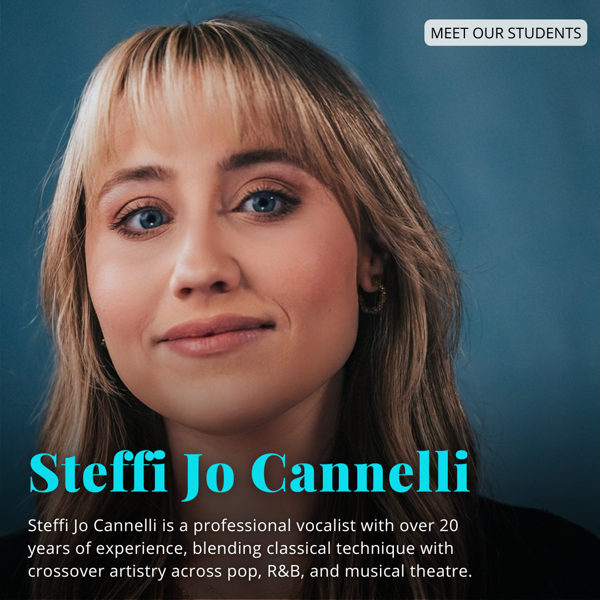
Meet the New MA Voice Pedagogy Cohort | Steffi Jo Cannelli

Voice Study Centre
Tuesday 23rd June 2026As MA Voice Pedagogy Cohort E4 settles in, we’re delighted to introduce some of the talented professionals joining our learning community from around the world. Among those joining us is Steffi Jo Cannelli, a professional vocalist with over 20 years of experience, blending classical technique with crossover artistry across pop, R&B, and musical theatre.
Read More...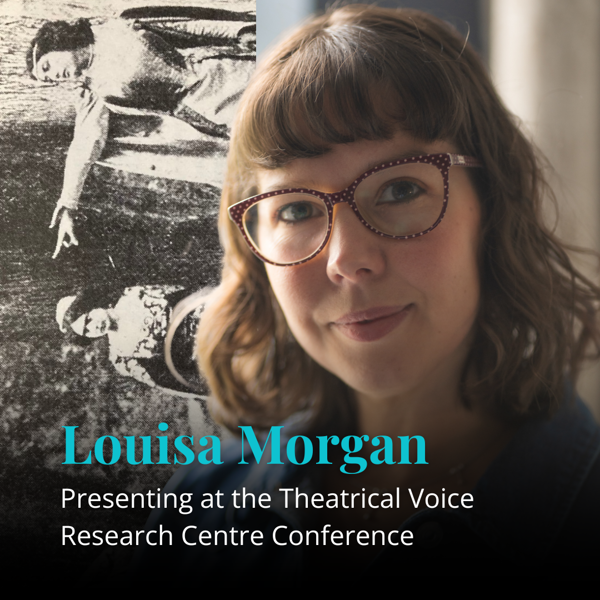
Director & Team News
Voice Study Centre Senior Lecturer Louisa Morgan to Present at Theatrical Voice Research Centre Conference
Voice Study Centre
Friday 19th June 2026Voice Study Centre senior lecturer Louisa Morgan will present her paper, Affective Athleticism in the Vocal Athlete: Performing Emotional Roles, at the Theatrical Voice Research Centre Conference at the University of Surrey on 26th June 2026.
Read More...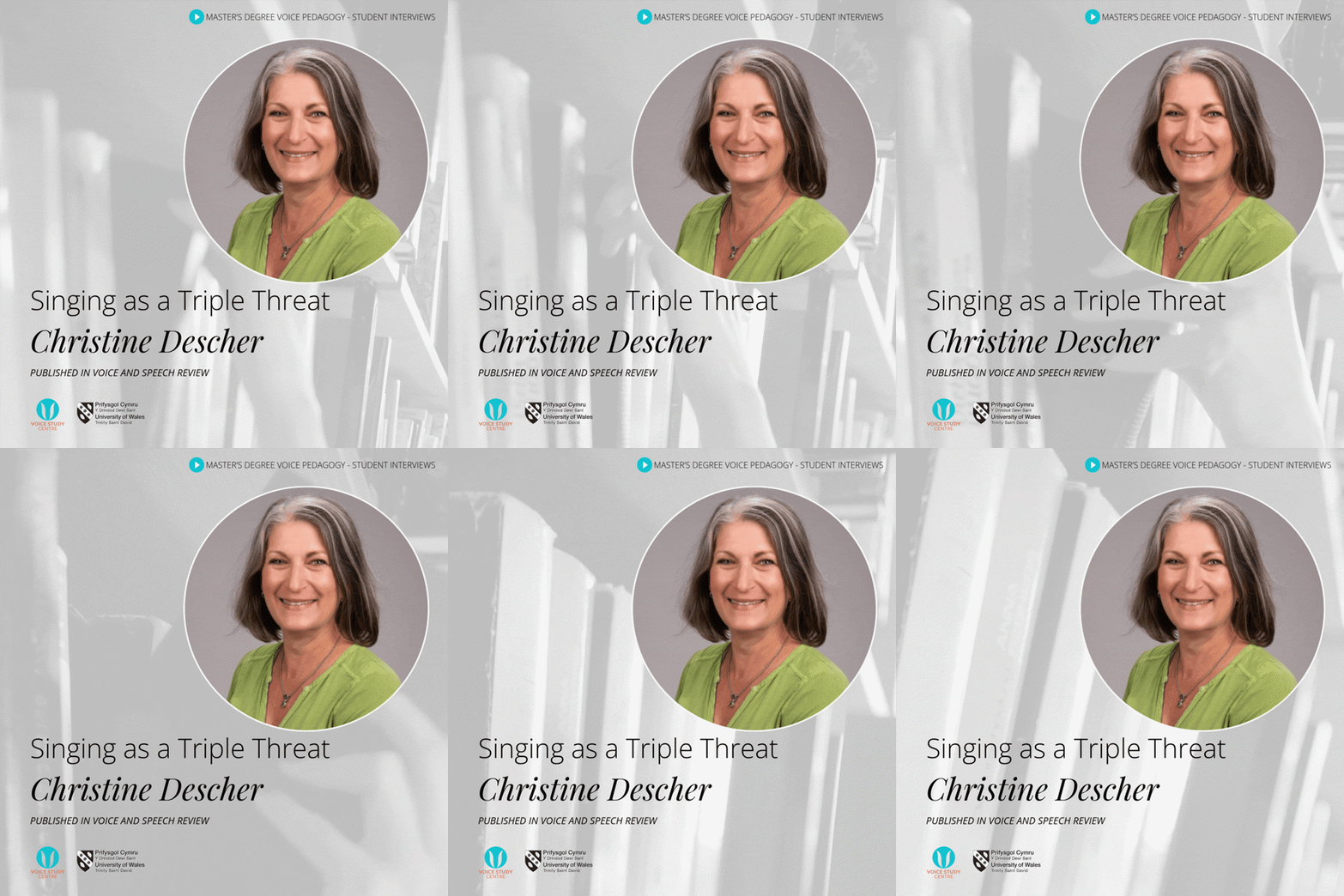
Blog
Singing as a Triple Threat: An Interview with Christine Descher on Her Newly Published Research
Voice Study Centre
Thursday 18th June 2026Watch our interview with MA Voice Pedagogy student Christine Descher as she discusses her newly published research, Singing as a Triple Threat: Performers' Experiences Across Musical Theatre Disciplines. Discover what inspired the study, the research journey behind it, and how its findings contribute to ongoing conversations around performer training, vocal health and wellbeing in musical theatre.
Read More...