Compassion Focused Training: An Updated Course for Singers, Singing Teachers, and Other Music Professionals
Monday 12th May 2025, 5:00 PM - 7:00 PM (London Time)
Tuesday 13th May 2025, 5:00 PM - 7:00 PM (London Time)
Wednesday 14th May 2025, 5:00 PM - 7:00 PM (London Time)
During the 1980’s & 90’s, British psychologist Paul Gilbert & colleagues noticed a trend among certain patients who received Cognitive Behavioral Therapy for depression: they would berate themselves for not improving in their treatment, despite having put effort into it. This astute observation led him to believe the likely reason for their lack of progress was the patients’ relentlessly self-critical thinking styles, which not only contributed to the maintenance of their depression, but likely to its origin as well. What followed was the creation of a groundbreaking new therapy called Compassion Focused Therapy (CFT; Gilbert, 2000) that aimed to alleviate suffering by helping individuals with high shame and self-criticism to generate affiliative feelings towards themselves and a more compassionate inner voice. Rooted in evolutionary psychology, neuroscience, Buddhism, CBT, & social and developmental psychology, CFT asserts the human brain is actually quite tricky to navigate, and thus, it’s not our fault we find ourselves struggling or suffering with it, or with life’s inevitable stressors.
Since its inception, CFT and related therapy models, e.g., Kristin Neff and Christopher Germer’s Mindful Self-Compassion (2013), have received increasing empirical support as treatments for anxiety, depression, and stress. In recent years, compassion-based programs are starting to arise within non-clinical settings as well, e.g., with athletes, university students, and musicians, as tools for coping with similar psychological challenges. When used with athletes in particular, self-compassion is promoted as an alternative to “mental toughness,” as it helps to develop courage to face the inherent challenges within competitive sports. Although the role self-compassion plays in alleviating musicians’ psychological stressors is still under investigation, it is believed to benefit them in similar ways.
In this updated, three-part course, you will learn about the role shame and self-critical thinking play in maintaining psychological distress, and about the theoretical underpinnings of Gilbert’s CFT model and Neff & Germer’s model of self-compassion. You’ll also learn about the three emotion regulation systems, and specifically how to increase activity in the Soothing & Contentment system, which is known to create feelings of safeness within oneself & with others, when activated. Specifically, you’ll learn compassion-enhancing strategies to help manage common sources of stress for musicians, i.e., dealing with mistakes & negative feedback of one’s work, audition setbacks, perfectionistic concerns of one’s performance, coping with burnout, career uncertainty & transitions, and others.
🏷️ Price £150 (UK VAT inclusive)
🎥 Recording automatically sent to all who book (even if you cannot attend live)
▶️ Rewatch as many times as you like
📜 Certificate of attendance available

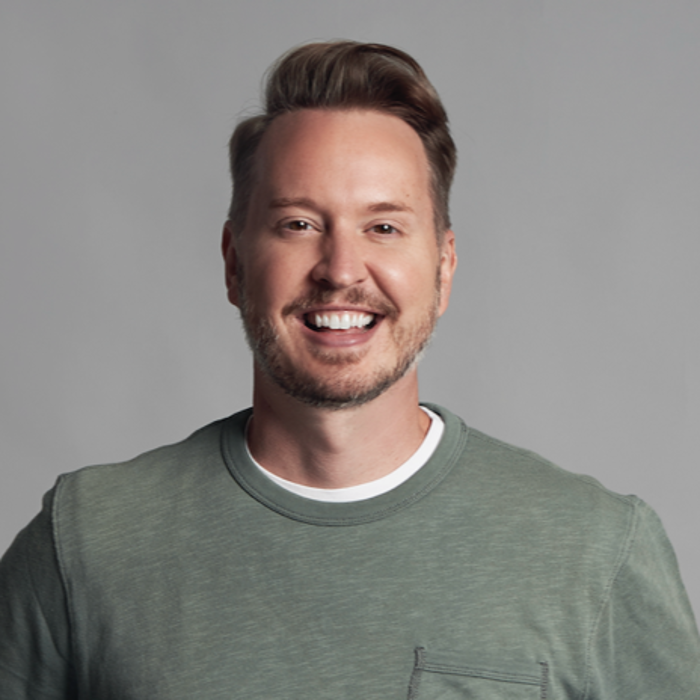
Dr David Juncos
David Juncos, PsyD, is a clinical psychologist, lecturer, performance coach, author, and music performance researcher based in Philadelphia, PA. He has 20 years of experience in treating a variety of clinical problems, including anxiety, mood, and substance use disorders.
Sorry, this is an archived short course...
We have plenty of upcoming short courses coming soon. See details of some of them below or look at the full list of short courses.
Tuesday 18th August 2026
3:00 PM - 5:00 PM
Tuesday 25th August 2026
3:00 PM - 5:00 PM
Tuesday 1st September 2026
3:00 PM - 5:00 PM
Tuesday 8th September 2026
3:00 PM - 5:00 PM
Tuesday 15th September 2026
3:00 PM - 5:00 PM
Tuesday 22nd September 2026
3:00 PM - 5:00 PM
(London Time)
Musical Theatre Vocal Pedagogy Certificate

Kevin Wilson
Join Kevin Wilson for this six-part certificated course, offering an in‑depth, practical exploration of contemporary voice teaching for musical theatre. Across six focused classes, participants develop a systematic approach to vocal technique, diagnosis, and repertoire selection that reflects the stylistic, physical, and emotional demands of the genre. The curriculum integrates vocal science, embodied voice work, registration theory, and stylistic awareness across the five major sub‑genres of musical theatre.


Tuesday 22nd September 2026
5:00 PM - 7:00 PM
(London Time)
Doubles and Stacks, Reverbs and Effects: Teaching Vocal Production Skills

Kelly Hoppenjans
Vocal production, or the process of recording a voice, is a multifaceted practice requiring a diverse set of skills. It has traditionally been considered the role of the producer in a recording studio, and vocalists can often feel intimidated by learning complex technical skills or prohibited by the cost of recording equipment. This course is aimed at voice coaches and vocalists who want to learn to record and shape their vocal tracks, as well as how to teach these skills to voice students. No matter your technical experience or setup, you can record great-sounding vocals!

Monday 28th September 2026
1:00 PM - 2:30 PM
Tuesday 29th September 2026
1:00 PM - 2:30 PM
Wednesday 30th September 2026
1:00 PM - 2:30 PM
Thursday 1st October 2026
1:00 PM - 2:30 PM
Friday 2nd October 2026
1:00 PM - 2:30 PM
(London Time)
Certificate in Executive Voice Coaching and Communication

Louisa Morgan
This five-day course is designed for professional coaches who want to extend their practice into executive coaching, leadership communication, and professional corporate voice work.