The Science Underlying Semi-Occluded Vocal Tract Exercises (SOVT)
Tuesday 16th September 2025, 5:00 PM - 7:00 PM (London Time)
Semi-occluded vocal tract exercises have a long history. Humans and animals have discovered that aerodynamic and acoustic pressures above the larynx can position the vocal folds for better self-sustained oscillation.
Two variables are most important, (1) the steady pressure produced behind the semi-occlusion (usually the lips) and (2) the amount of acoustic inertance produced in the supraglottal airway.
In this course, Dr Ingo Titze and Karin Titze Cox will be exploring this topic in deph and it's relevance to vocal pedagogy.
This workshop will introduce the first book dedicated to Semi-Occluded Vocal Tract methods: Voice is FREE after SOVT. The information presented from the book is inclusive with scientific explanation and application for singer, teacher and therapist alike. The presentation will review the evolution of these methods and is based on a great deal of current peer reviewed literature in the area of voice.
Ingo and Karin will introduce visual examples, diagrams, tables and video links for reference. This should appeal to the scientist at heart searching for why their methods in vocal performance or as successful teachers, coaches or voice therapists work. Singers, teachers, coaches, ENTs, speech pathologists, research scientists and vocologists will be introduced to the comprehensive work, the history and current work being developed to help their clientele and patients even further. This can help trainers, performers and healers as it is heavily referenced with the development of voice science principles. These principles relate to all methods that use semi-occluded vocal tract exercises including the popular method of Straw Phonation popularized and developed extensively by both authors.
A framework for evaluation and training will be introduced to incorporate principles into their own style of teaching and training and translate difficult scientific principles to others.
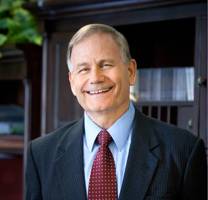
Dr Ingo Titze
Dr Ingo Titze, educated as a physicist (Ph.D.) and engineer (M.S.E.E.), has applied his scientific knowledge to a lifelong love of clinical voice and vocal music. He has written over 500 publications and six books in voice production. He is currently Senior Scientist at the University of Utah Center for Vocology and Chairman of the Board of the National Center for Voice and Speech.
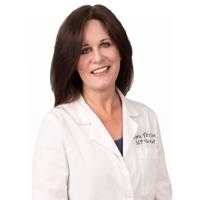
Karin Titze Cox
Karin Titze Cox is a certified Speech Language Pathologist (SLP-CCC) specializing in vocology, the science and practice of voice habilitation. She received her BA degree from Brigham Young University and her MA from the University of Iowa. She spent her early career in research and practicing in university hospital clinics.
Attend this course for as little as £22 as part of the Voice Professional Training CPD Award Scheme.
Learn MoreSorry, this is an archived short course...
We have plenty of upcoming short courses coming soon. See details of some of them below or look at the full list of short courses.

Wednesday 4th March 2026
1:00 PM - 2:00 PM
Wednesday 11th March 2026
1:00 PM - 2:00 PM
Wednesday 18th March 2026
1:00 PM - 2:00 PM
Wednesday 25th March 2026
1:00 PM - 2:00 PM
Wednesday 1st April 2026
1:00 PM - 2:00 PM
Wednesday 8th April 2026
1:00 PM - 2:00 PM
(London Time)
Learn to Coach RP and SSBE – a Certificate in Accent Coaching

Louisa Morgan
This six-week course is an opportunity to learn about both Received Pronunciation and Standard Southern British English. Rather than a course in learning how to speak RP/SSBE (there are many brilliant available courses for this already), this course is about learning how to coach it.

Wednesday 25th March 2026
5:00 PM - 7:00 PM
(London Time)
Mastering the Art of "Marking": Vocal Longevity for the Modern Singer

Jacob Wright
Don’t just save your voice—optimize it! Join Jacob Wright as he explores marking technique in singing, a vocal conservation strategy used by singers during rehearsals and extended performance periods. Marking involves singing at reduced vocal intensity, altered pitch, or modified vocal quality to preserve vocal health while maintaining musical and dramatic engagement. Participants will gain practical tools for implementing marking in their own practice, teaching, or clinical work, supported by current research and voice science principles!
Friday 27th March 2026
1:00 PM - 3:00 PM
(London Time)
Muscle Tension Dysphonia in the Singing Voice!

Dr Claire Thomas
A specialist course for singing teachers and voice professionals! Designed specifically for those working with singers, this in-depth course with Dr Claire Thomas explores Muscle Tension Dysphonia (MTD) through the lens of the singing voice - bridging clinical research and studio practice.